
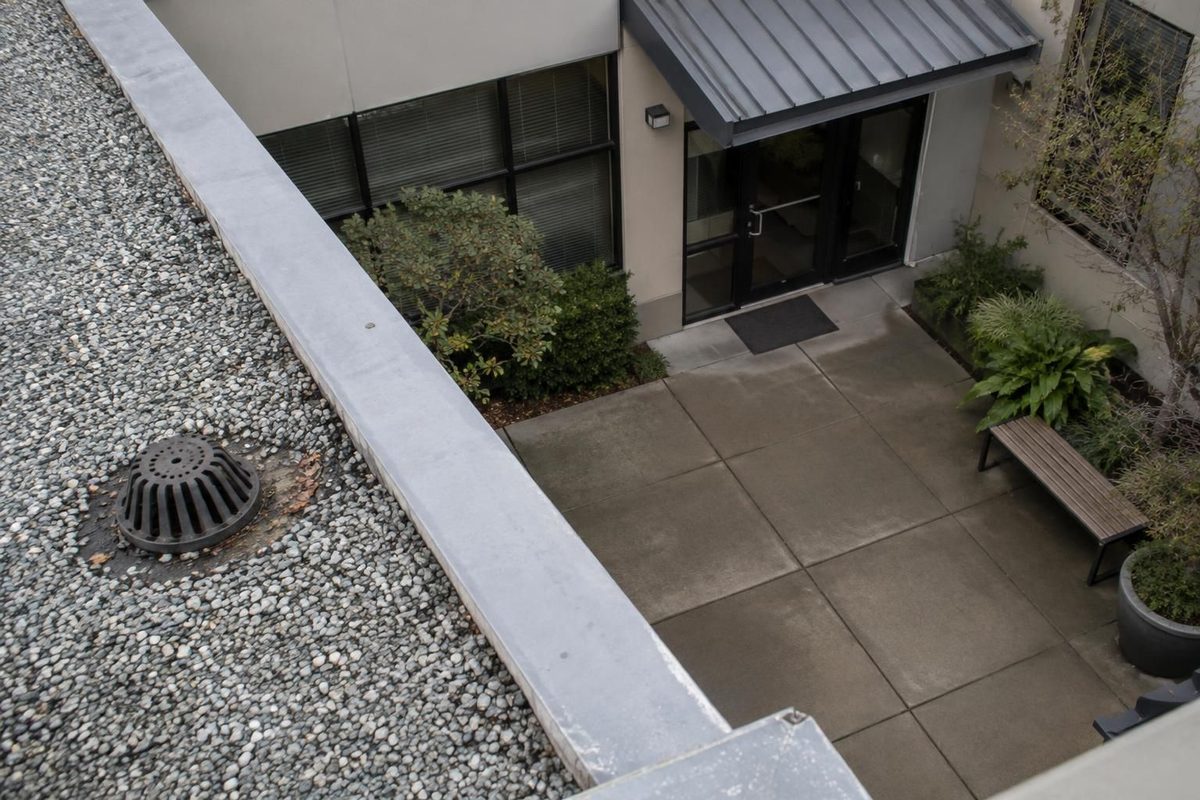
For an occupied commercial property, arrange roof-drain access through the person authorized to approve it, then tell the roofer about access rules, operating hours, and known obstructions. Observe water concerns only from a safe indoor or ground-level location. Ask the contractor to report what was accessible, what could not be assessed, and whether a focused repair or further evaluation is warranted.
Why access coordination belongs in the inspection plan
At an occupied commercial property, a roof-drain inspection depends on more than the drain itself. The roofer needs authorized, safe access, and the property contact needs to know which areas can be reached and what may be in the way. A clear plan reduces scheduling confusion and helps distinguish a completed inspection from a limited one.
In San Rafael, winter rain can make drainage concerns more noticeable, while leaves or other debris may accumulate at some properties. Those conditions vary by building. An inspection should establish what is present on this roof, rather than assume a blocked drain or a particular cause from a report of water below.
Decide who can authorize access and coordinate the visit
Before booking, identify the person with authority to approve roof access and the person who can explain building procedures. They may be different people: an owner, property manager, facilities contact, tenant representative, or another designated person. Confirm who will communicate with the roofer if access details change.
Ask about access routes, locked areas, check-in requirements, operating hours, and any restrictions that affect scheduling. If a tenant or business occupies the space below or near the access point, coordinate timing and notify the relevant contact. Do not assume that a roofer can enter a secured area or move property without permission.
Report obstructions without trying to clear them
Roof equipment, stored materials, guards, or debris can limit a view of a drain or the surrounding roof. Tell the roofer what you know about possible obstructions and where they may be, even if the location is approximate. The contractor can then determine whether the area is accessible and whether another authorized party needs to be involved.
Do not climb onto the roof or attempt to move equipment, remove a drain cover, or clear a blockage. Conditions may be slippery, concealed, or close to electrical or mechanical equipment. If access or obstruction removal requires another contractor or building staff member, clarify who is responsible and whether that work must happen before the roofing visit.
Share useful observations from safe locations
From the ground or a safe indoor location, note where water appears, when it occurs, and whether it follows rainfall or continues afterward. If water is visible near the building, describe its location and whether it seems to be overflowing or pooling. These observations can help the roofer focus the assessment, but they do not establish what is happening at the drain or where water entered the roof assembly.
If a ceiling is sagging, keep people away from the area and seek appropriate emergency or professional assistance. For water near electrical equipment, avoid contact and get qualified help. Do not puncture a ceiling or handle electrical equipment near water.
Ask what the roofer could assess—and what remains unknown
A qualified roofer can evaluate whether access was safe, inspect the visible drain and surrounding roof area when reachable, and consider related drainage paths and roof conditions. The visit may be limited if equipment blocks the area, access is unavailable, or weather makes inspection unsafe. Ask the contractor to state those limits rather than treating an inaccessible area as cleared.
Request a plain-language account of observations, the areas inspected, any concerns that need another trade or further assessment, and the basis for recommended work. If a repair is proposed, ask what portion of the drainage system it addresses and what is outside the scope. A localized issue may warrant a focused repair or follow-up assessment rather than replacement of a larger roof area.
Close the loop after the visit
Confirm how and when the inspection summary will reach the property contact, and who will relay relevant information to occupants. If the roofer could not inspect a location, make a plan for resolving the access issue before arranging a return visit. Where another party must remove or relocate an obstruction, confirm authorization and responsibility first.
For a building with recurring drainage concerns, ask what observations should prompt another call and what routine checks are appropriate for the property. That conversation can establish a practical process without asking unqualified staff to access the roof or perform drain work.
Before arranging a roof-drain inspection
- Identify who can authorize access to the roof and who will meet the roofer, if needed.
- Tell the property manager or roofer about locked gates, access rules, operating hours, and any tenant or business activity that affects scheduling.
- From a safe ground-level location, note visible overflow, standing water, or debris around roof drains; do not climb up to check.
- Report rooftop equipment, stored items, or other obstructions you know about, and say whether their location is uncertain.
- Ask the roofer to explain how access will be handled and whether another person must coordinate equipment or obstruction removal.
- After the visit, request a summary of what was accessible, what could not be assessed, and any recommended next steps.
Questions about this approach
What if the roofer cannot reach a roof drain?
Not necessarily. A roofer may be able to inspect other accessible areas and document the limitation, but an unseen drain cannot be treated as assessed. Ask what prevented access and what coordination is needed for a follow-up visit.
What should staff do if they notice water during the inspection?
Share the location and timing of the water, along with any visible signs of overflow or pooling from a safe place. Do not climb up or try to clear the drain. If water creates a safety hazard indoors, keep people away and seek appropriate professional assistance.
For help applying this approach, explore our roof inspections.
Talk with Able Roofing about your roof
Share the symptoms, property details and questions you want answered. Request a roofing estimate, email jon@ableroofing.biz, or call (415) 786-7308.