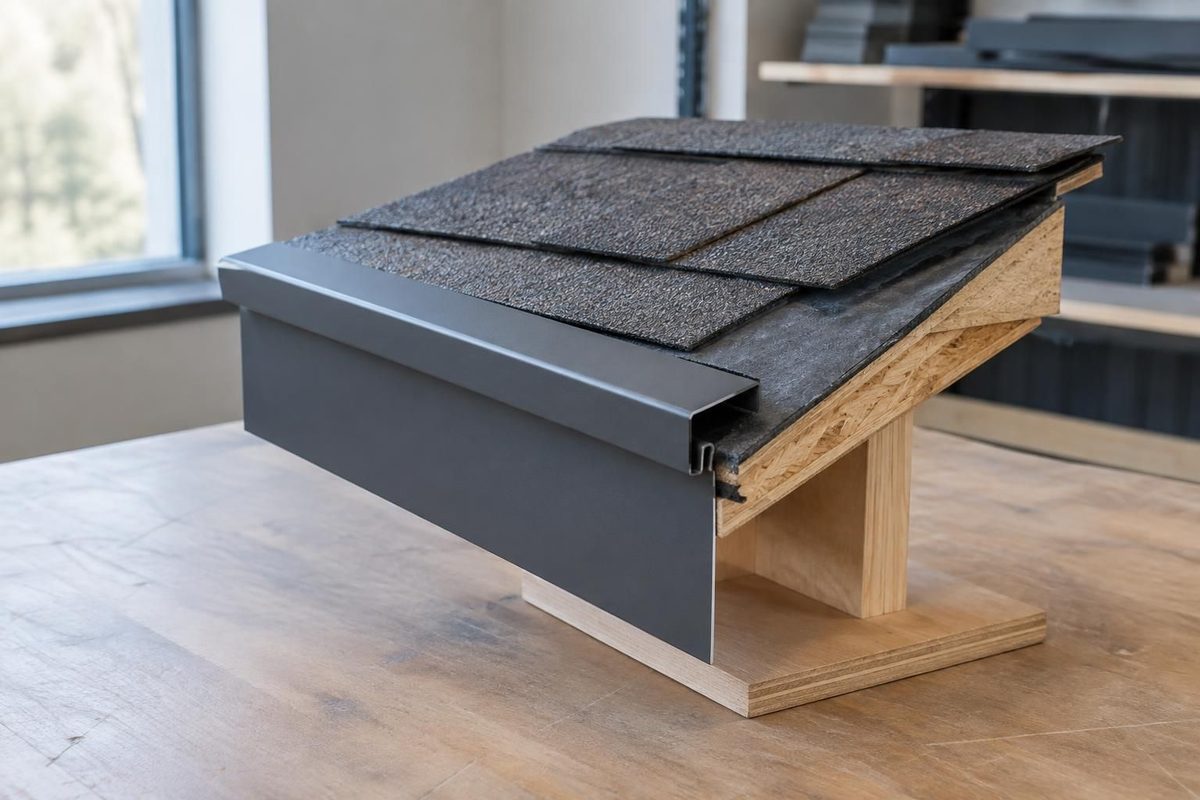
Roof-edge metal can help direct water at the perimeter, but the phrase “new edge metal” does not explain which edges are included or how the detail connects to the rest of the roof. For a San Rafael replacement, ask the roofer to identify each location, describe the intended water path, and clarify how the metal relates to the roofing, underlayment, fascia, and gutters. Those answers make the proposed scope easier to evaluate.
Start by distinguishing the edges in the proposal
Roof edges are not all the same. Eaves run along the lower edge of a sloped roof, where water generally travels toward a gutter or other drainage path. Rake edges follow the sloping sides of a gable. A roof may also have ridges, hips, valleys, and transitions where a roof meets a wall; these are separate details and may use different components.
When reviewing a proposal, ask the roofer to identify the edges included and name any that are excluded. A line item such as “new edge metal” can sound comprehensive while leaving unclear which roof sections or transitions it covers. A marked-up roof plan or clear written description can make the scope easier to understand without requiring construction drawings.
Understand the metal’s role in the water-shedding system
Edge metal—sometimes called drip edge or roof-edge flashing—helps manage water at a roof perimeter and protects vulnerable edges of the roof assembly. Its function depends on how it meets the roofing, underlayment, fascia, and drainage components. The metal is not a substitute for sound roofing or a complete water-management detail.
Water should be directed along an intentional path rather than behind adjacent materials or into vulnerable wood. The exact arrangement depends on the roof type, edge location, existing construction, manufacturer instructions, and applicable requirements. A qualified roofer should explain the intended water path for the particular detail instead of relying on a generic label.
Ask how materials and adjoining components will work together
The proposal should identify the specified metal or profile clearly enough to distinguish it from a broad phrase such as “metal trim.” Material, shape, and finish can vary, and a detail suitable at an eave may not be the right choice at a rake or another transition. Suitability depends on the complete roof assembly, its condition, product instructions, and requirements that should be verified for the project.
Ask how the proposed edge treatment relates to the roof covering and underlayment, and whether existing fascia or gutters are being retained, repaired, or replaced. If gutters are part of the drainage path, the roofer should clarify how the edge detail meets them. Avoid assuming that a new metal piece resolves deteriorated wood, poor drainage, or a separate wall-flashing concern.
Separate included work from conditions that need assessment
In a replacement, some edge components may be visible while others are covered or connected to adjacent materials. A proposal can describe planned work and still note that concealed damage cannot be confirmed until the relevant area is accessible. Ask what the stated scope assumes, what conditions could change it, and how the contractor will communicate before proposing additional work.
A small, localized defect does not automatically mean the entire roof needs replacement. If the roof covering remains serviceable and the concern is limited to one edge, a repair or further assessment may be more appropriate. Conversely, widespread deterioration, recurring moisture, or edge problems across multiple sections may lead the roofer to discuss broader work. The decision should rest on the roof’s observed condition and the scope needed—not on one symptom alone.
Use the appointment to clarify what you can see
Before a service appointment in San Rafael, note where you have observed staining, dripping, or visible damage, and when it appears—for example, during wind-driven rain or after a long wet period. From the ground or a safe indoor location, you may also note whether a gutter appears to overflow or whether water seems to follow an unusual path. These observations help direct the discussion but do not establish where water enters.
Ask the roofer to explain which edge or transition is being evaluated, what was observable, and what could not be confirmed without access or opening part of the assembly. If the project may involve a requirement that needs verification, ask which detail needs checking and consult the local building department or relevant professional. Do not climb onto the roof to verify the work yourself.
Keep the decision tied to a clear written scope
Before approving work, compare the proposal’s description with the actual roof areas under discussion. A clear scope identifies locations, components, exclusions, assumptions, and how possible concealed conditions will be handled. If wording is unclear, request clarification in writing rather than inferring that every edge or connection is included.
After the work, ask what portions of the scope were completed and whether any area differed from the original plan. If a concern remains, describe its location and timing and request an explanation of what should be assessed next. This creates a more useful record for follow-up than treating a metal edge component as a stand-alone guarantee against leaks.
Questions to clarify in a roof-edge scope
- Which roof edges, rake edges, eaves, ridges, or transitions are included?
- What metal profile and material are specified, and where will each be used?
- How does the detail direct water onto the roof surface or into the intended drainage path?
- How will the edge metal relate to the roofing, underlayment, fascia, and gutters?
- Are any existing conditions or concealed areas excluded pending further assessment?
- What signs of incomplete or damaged edge details should prompt a follow-up?
Questions about this approach
Does one edge-metal detail apply around the entire roof?
Not necessarily. Eaves, rakes, and other transitions have different positions and may need different details. Ask which locations the proposal covers and whether any existing components will remain.
If my proposal says “new edge metal,” can I assume every roof edge is included?
An edge-metal item alone does not establish that the whole perimeter is included. Ask for the affected roof sections and any exclusions to be stated clearly in the proposal.
Can new edge metal prevent every roof leak?
No. Edge metal is one component of a larger assembly. Whether it is appropriate depends on its connections, the roof’s condition, the specified products, and the applicable project requirements.
For help applying this approach, explore our roofing services and materials.
Talk with Able Roofing about your roof
Share the symptoms, property details and questions you want answered. Request a roofing estimate, email jon@ableroofing.biz, or call (415) 786-7308.