
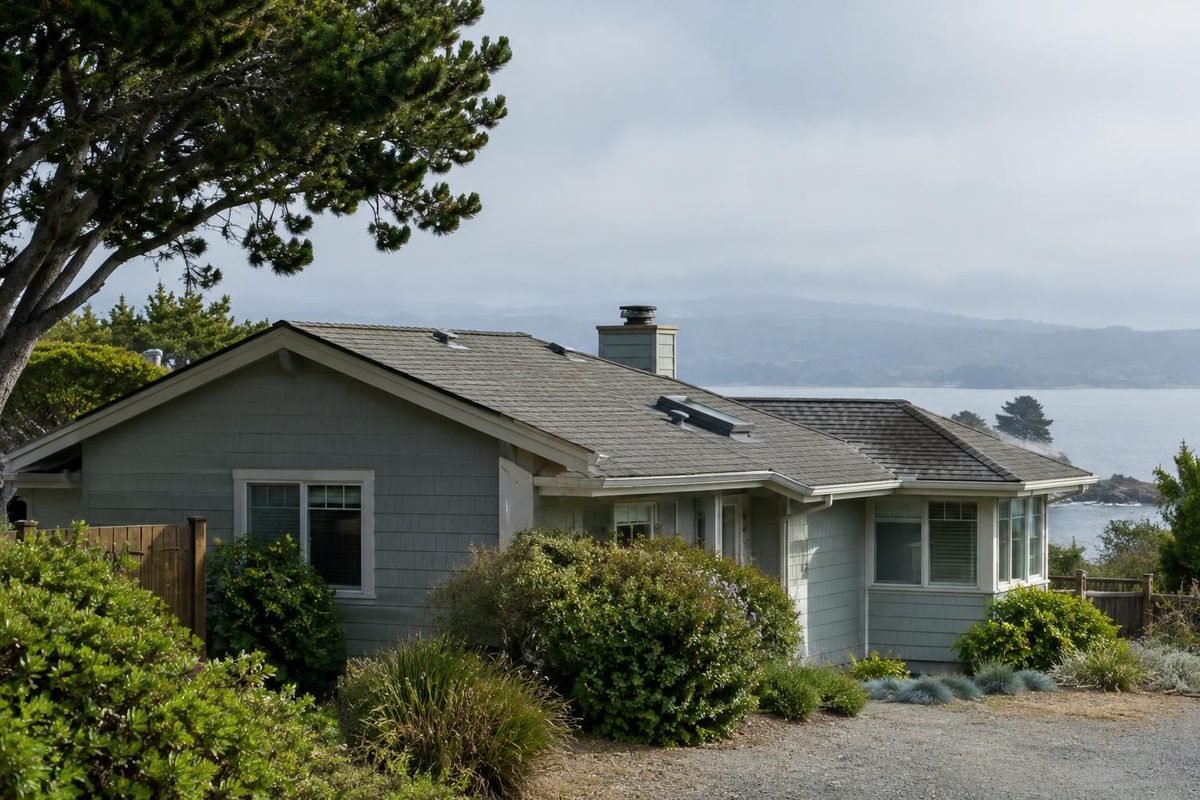
Coastal exposure is not the same for every Marin roof. A property near the water, a sheltered home under trees, and an inland building can face different combinations of wind-driven rain, fog, shade, debris, and drainage challenges. For an inspection, safely note the setting and any moisture patterns, then ask a roofer to distinguish visible conditions from possible causes. A single damp area or interior stain cannot diagnose a roof.
Coastal influence is a site question, not a countywide assumption
A roof’s exposure depends on its actual setting: distance from the water, prevailing wind, nearby trees and buildings, roof orientation, and how well water drains. A coastal property may experience salt-bearing air and wind-driven moisture; a home farther inland may be more affected by shade, leaf debris, or long periods of winter rain. Neither location alone establishes the roof’s condition.
In San Rafael and elsewhere in Marin, conditions can vary from one side of a building to another. A sheltered roof face may stay damp longer than a sunnier, more exposed one. An inspection should consider those differences rather than label the whole property “coastal” or assume a single exposure applies everywhere.
What moisture can—and cannot—tell you
Fog, dew, and rain can leave surfaces damp, but a damp-looking area is not proof of a leak. Persistent moisture may make it more important to assess drainage, shade, debris, ventilation, or the condition of roof details. The relevant cause depends on the roof assembly and surrounding conditions.
Indoors, note the location and timing of stains, drips, or musty odors. A mark that appears after wind-driven rain may help a roofer narrow the investigation, but it does not identify the entry point. Water can travel along roof layers or framing before becoming visible. A ceiling stain during dry weather can also have a non-roof source.
Look for patterns from a safe vantage point
Observe the roof from the ground or a safe indoor location. If you can see it without climbing, note whether debris tends to collect near a roof edge or valley, whether runoff appears to spill over, and whether a particular area stays shaded. Photos from the ground may help communicate what you noticed, but they cannot establish hidden damage.
Avoid walking on roofing or approaching a visibly damaged area. If a ceiling is sagging, stay out from beneath it and seek appropriate professional assistance. Keep clear and get help promptly for electrical hazards or serious structural damage; do not touch wet electrical equipment.
What a qualified roofer evaluates
A roofer can assess the roof material and its condition, drainage paths, edges, flashings, penetrations, and signs of wear or moisture. The inspection may also consider shade, debris, wind exposure, and whether roof details are compatible with the existing assembly. The appropriate scope depends on what can be safely observed and whether further evaluation is needed.
Ask the roofer to separate visible findings from possible explanations. If a moisture concern could involve plumbing, condensation, or another building component, ask what additional professional assessment may be needed rather than assuming the roof is responsible.
Match the next step to the evidence
A localized, accessible defect on a roof that is otherwise in serviceable condition may call for a focused repair or further assessment—not automatic replacement. Broader deterioration, multiple recurring problem areas, or an assembly with limited remaining serviceability may make replacement worth discussing. A single stain or a home’s proximity to the coast does not settle that decision.
Ask what evidence supports the proposed scope, whether the work addresses the likely source or only a visible symptom, and what remains uncertain. If replacement is being considered, clarify how the existing roof condition and site exposure affect the recommendation. Requirements for particular work can vary; confirm applicable requirements with the local building department or relevant professional.
- Note the property’s exposure, shade, nearby trees, and visible runoff patterns.
- Record where and when indoor moisture appears, without treating it as a confirmed roof leak.
- Collect any available roof age, material, repair, and maintenance records.
- Ask the roofer what was directly observed and what is only a possible explanation.
- Request a clear explanation of repair, further assessment, or replacement options and their limits.
Make the appointment more useful
Before scheduling, describe the building’s setting and the concern in practical terms: where you noticed it, when it appears, and whether wind or rain seems relevant. Mention areas that are difficult to access or any recent work on the roof. This gives the roofer context without asking you to investigate from an unsafe position.
After the inspection, keep the written findings with your maintenance records. A useful report should identify the areas assessed, state any access limitations, describe observed conditions, and explain the recommended next step. If the cause remains uncertain, ask what additional assessment could help resolve it.
What to note before a roof inspection
- Identify where the building sits in relation to the coast, open wind exposure, trees, and nearby structures.
- From the ground, note visible debris, discoloration, lifted-looking edges, or areas that stay damp; do not climb to investigate.
- Record when moisture or staining appears indoors and whether it follows wind-driven rain, fog, or a dry spell.
- List the roof material if known, its approximate age if documented, and any past repairs or maintenance.
- Ask the roofer to distinguish observed damage from possible causes and explain what further access or evaluation is needed.
Questions about this approach
Does a home near the coast automatically need more roof work?
No. Fog or marine air describes a possible exposure, not proof of damage or a particular repair need. Roof material, installation, condition, drainage, shade, and maintenance history all matter. Ask for findings specific to the building rather than a conclusion based only on its location.
If I see discoloration, does that mean the roof is leaking?
Not necessarily. Some materials may develop surface changes from age, debris, or moisture, but appearance alone does not show whether the roof is failing or leaking. Share what you can see from the ground and ask the roofer to assess the material and surrounding details safely.
What should I ask if the inspection cannot confirm the moisture source?
Give the roofer the location, timing, and weather conditions you observed, along with any known repair or roof history. Ask what parts of the roof were accessible, what was directly observed, and whether another assessment is needed before choosing repair or replacement.
For help applying this approach, explore our roof inspections.
Talk with Able Roofing about your roof
Share the symptoms, property details and questions you want answered. Request a roofing estimate, email jon@ableroofing.biz, or call (415) 786-7308.