
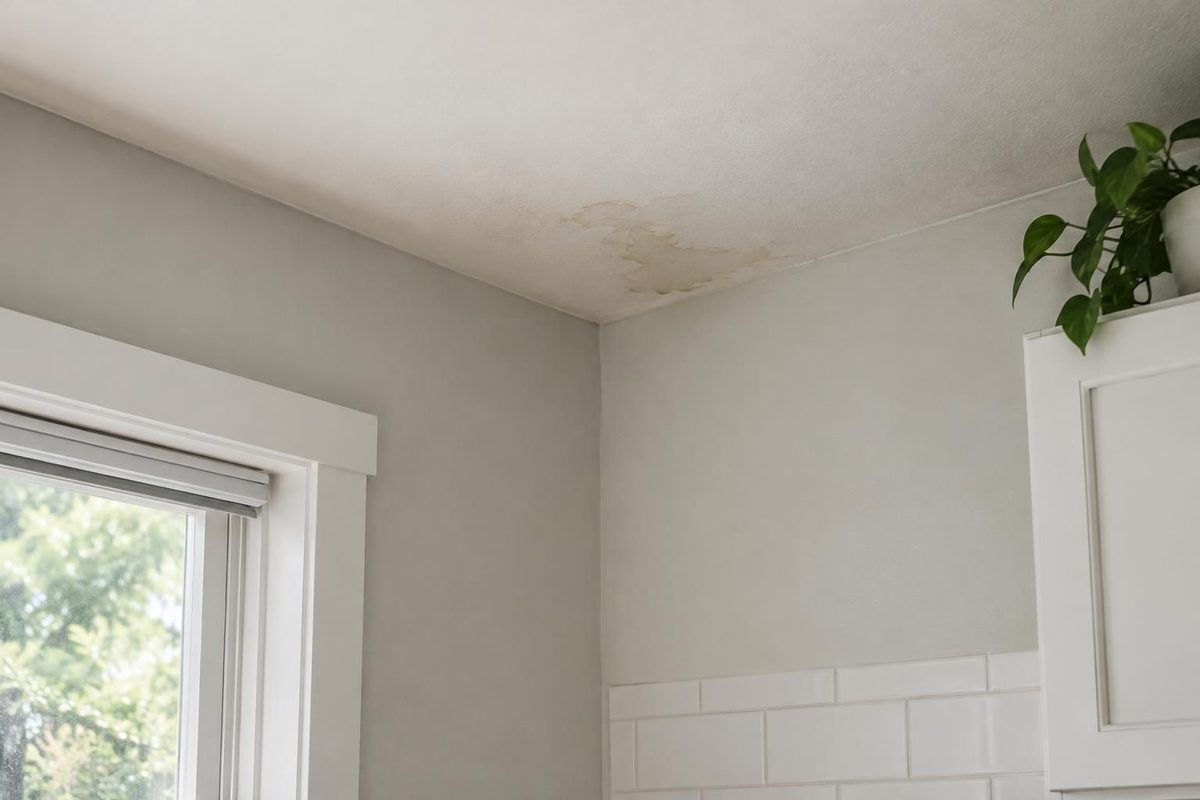
A ceiling leak that shows up during otherwise dry weather does not identify its own source. Water from an earlier storm may emerge later, but plumbing leaks and condensation can also cause dampness or staining. Note when it happens, what nearby fixtures were used, and whether the area changes after rain. Share those observations with a roofer or plumber; do not climb onto the roof or open a wet ceiling to investigate.
Why dry weather does not rule out a roof leak
A ceiling stain or drip that appears when it has not rained can still involve the roof, but the timing alone does not identify the source. Water from an earlier storm may have remained in a roof assembly or traveled along framing before reaching the ceiling. A leak may become noticeable later as materials shift, dry, or release trapped moisture.
In Marin County, periods of winter rain can be followed by drier intervals, and roof conditions vary with shade, debris, wind-driven moisture, and drainage. Those factors can shape where water collects or travels, but they do not prove a roof is responsible for a particular indoor mark.
Consider plumbing and condensation as well
A pipe, drain, fixture, or appliance connection above or near the room can leak intermittently. The timing may relate to a shower, sink, toilet, laundry cycle, or water use elsewhere in the building. A plumbing professional may need to evaluate those possibilities before a roof repair is specified.
Condensation is another possibility. Moist indoor air can meet a cooler surface and leave moisture, especially around poorly ventilated or insulated areas. Condensation may appear as dampness, spotting, or recurring discoloration, but those signs are not enough to confirm the cause. A qualified professional can consider ventilation, insulation, plumbing, and the roof assembly as appropriate.
Use timing and location as clues, not a diagnosis
Write down when the symptom appears and what was happening beforehand: rainfall, a temperature change, use of nearby plumbing, or operation of an appliance. Note whether the area dries and returns, whether a stain expands, and whether there are other visible damp spots. This timeline helps a roofer or plumber decide what to evaluate.
The visible ceiling location may not be directly beneath the source. Water can move along framing or other surfaces, so a mark beside a bathroom does not automatically establish a plumbing leak, just as a mark below a roof slope does not prove roof failure. Avoid opening the ceiling or disturbing wet materials to trace the path yourself.
Know when to call a roofer, plumber, or both
If the ceiling symptom follows rainfall or appears near an exterior roof feature, a roofer can assess the roof covering, flashing, drainage, and accessible areas relevant to the reported location. If it follows fixture or appliance use, a plumber may be the more direct first call. When the pattern is unclear, explain both possibilities when scheduling; the professionals can advise whether coordinated assessment is sensible.
A service visit should connect observations to a scope rather than leap from one stain to full replacement. Ask what was checked, what remains inaccessible or uncertain, whether the proposed work is a repair or further assessment, and what evidence supports that recommendation. A localized repair may be appropriate when a discrete issue is confirmed and the surrounding roof is serviceable; broader deterioration may call for a different discussion.
Protect people and preserve useful information
Keep observation ground-level or from a safe indoor location. Do not climb onto the roof, enter an unsafe attic, touch electrical equipment near moisture, or puncture a bulging ceiling. If the ceiling sags, water is close to electrical equipment, or damage is serious, keep people clear and seek appropriate emergency or professional assistance.
For a non-urgent appointment, share the symptom timeline, safe photos, recent weather context, and any known plumbing use or maintenance. That information can help the roofer distinguish what is known from what still needs investigation.
A short preparation checklist
Before calling, gather a few practical details. Keep descriptions factual; avoid deciding the source from appearance alone.
- Record when the ceiling mark or drip first appeared and whether it followed plumbing use, heating, or a change in indoor humidity.
- Note whether the area feels damp, whether the mark is growing, and whether there is an odor or visible surface change; do not touch a sagging ceiling.
- Check whether a bathroom, kitchen, laundry area, or water-supply line is above or beside the affected room, using safe indoor access only.
- Observe whether the symptom is limited to one spot or appears in several places, and whether it changes after rain or stays unrelated to weather.
- Photograph the area from a safe position and keep the date with the image for the roofer or plumbing professional.
- If water is near electrical equipment, the ceiling is sagging, or damage is worsening, keep people away and seek appropriate professional or emergency help.
What to note before requesting an assessment
- Record when the ceiling mark or drip first appeared and whether it followed plumbing use, heating, or a change in indoor humidity.
- Note whether the area feels damp, whether the mark is growing, and whether there is an odor or visible surface change; do not touch a sagging ceiling.
- Check whether a bathroom, kitchen, laundry area, or water-supply line is above or beside the affected room, using safe indoor access only.
- Observe whether the symptom is limited to one spot or appears in several places, and whether it changes after rain or stays unrelated to weather.
- Photograph the area from a safe position and keep the date with the image for the roofer or plumbing professional.
- If water is near electrical equipment, the ceiling is sagging, or damage is worsening, keep people away and seek appropriate professional or emergency help.
Questions about this approach
Does a ceiling leak during dry weather mean the roof is ruled out?
Not necessarily. A roof-related pathway can retain or redirect water from earlier rain, while plumbing and condensation can also create similar symptoms. The timing and location are useful clues, not proof; a professional assessment may need to consider more than one source.
Should I call a roofer or a plumber first?
Describe the timeline, nearby plumbing, recent rain, and any safe photos. A plumber may be appropriate if the symptom tracks water use; a roofer may be appropriate if it relates to rain or roof features. If the cause is uncertain, mention both when arranging service.
What if the ceiling is bulging or water is near a light?
Keep people away from a sagging ceiling, and do not puncture it or handle electrical equipment near water. Seek appropriate emergency or professional help for a sagging surface, electrical hazard, or serious damage.
For help applying this approach, explore our roof repair in San Rafael.
Talk with Able Roofing about your roof
Share the symptoms, property details and questions you want answered. Request a roofing estimate, email jon@ableroofing.biz, or call (415) 786-7308.