
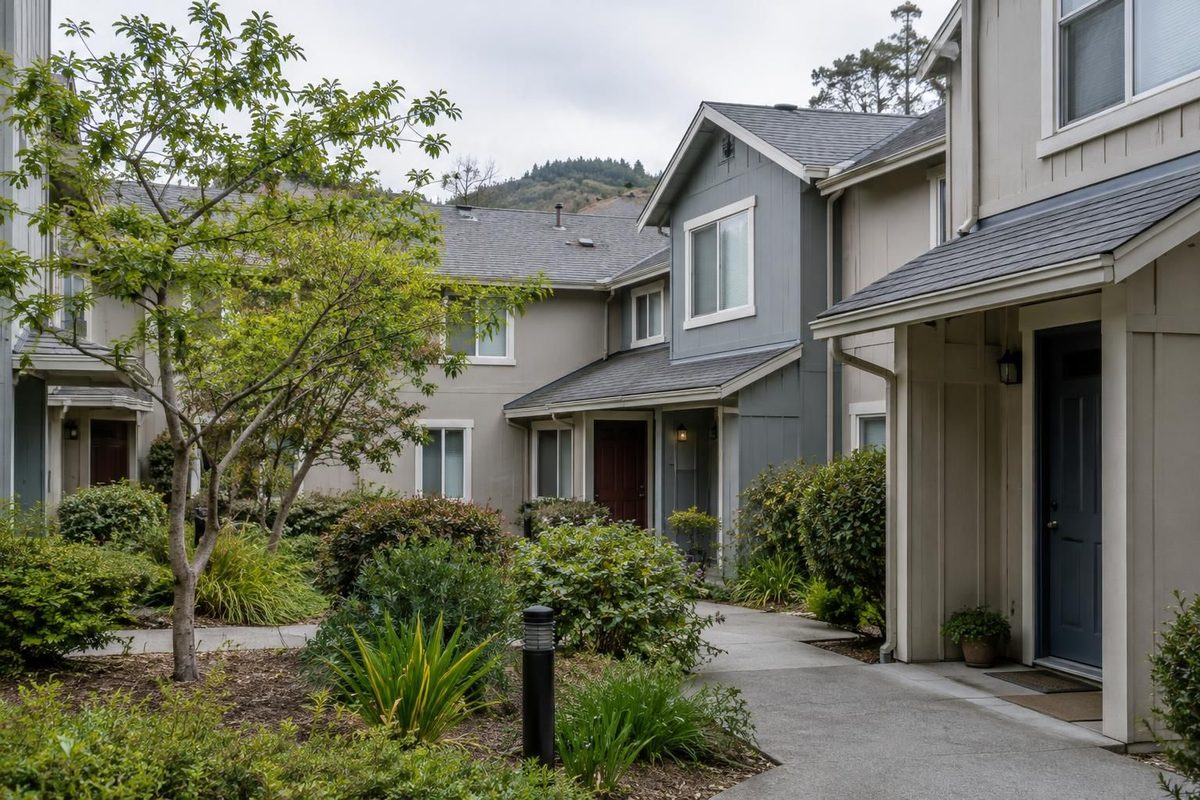
For a shared-building reroof in San Rafael, first establish who can authorize the work and which roof areas the proposal covers. Then coordinate access, resident updates, and questions about shared versus unit-specific repairs. A qualified roofer can explain observed conditions and options, but the building’s own decision process determines who may approve the project; clarify that before treating an estimate as a commitment.
Start with the building’s decision process
Before discussing shingles or schedules, find out how the building makes decisions about shared property. In a townhouse or other shared building, the person arranging an assessment may not be the person authorized to approve replacement. Ownership structures and governing documents differ, so do not assume that a resident, manager, or one owner can approve work for everyone.
Ask the appropriate manager, association representative, or co-owners to confirm who can request bids, select a contractor, authorize the scope, and communicate decisions. A roofer can explain technical options, but does not determine the building’s internal authority. If there is uncertainty, resolve that through the building’s established process or qualified advice before treating a proposal as approved.
Define which roof areas are being considered
A shared building may have roof planes, transitions, drainage routes, or penetrations that serve more than one unit. A replacement conversation should identify the areas included, not rely on a broad label such as “the roof.” Ask the roofer to describe the areas they assessed and whether the proposed work covers the full roof or only defined sections.
In San Rafael, winter rain and wind-driven moisture can make water entry difficult to trace from a room alone. A ceiling mark in one unit does not automatically establish that the roof area directly above it is the source. The roofer should explain what was observed, what remains uncertain, and whether a limited repair or further assessment may be more appropriate than replacing a larger area.
Separate shared work from unit-specific concerns
Ask the contractor to distinguish the shared replacement scope from related items that may be outside it. Examples include repairs to a particular roof transition, work around a roof opening, damaged interior finishes, or drainage changes. These may require separate assessment or coordination; their presence does not by itself determine who is responsible.
A clear written proposal should state what work is included, what is excluded, and what conditions could prompt a change in scope. If a roof component appears to serve only one part of the building, ask how that conclusion was reached and who will decide whether it belongs in the shared project. Keep technical assessment separate from any ownership or cost-allocation decision.
Plan access and communication before scheduling
Shared work can affect more than the roof: residents may need to know about access to common areas, noise, temporary restrictions, and the timing of updates. Name a primary contact who can collect questions and relay confirmed information. For occupied homes, clarify how the contractor will request access if an assessment requires entry to a unit or another controlled area.
Ask what access the contractor needs, which areas must remain clear, and how schedule changes will be communicated. Do not promise residents a particular start date or duration unless the contractor has confirmed it. If a resident observes an active leak, report its location and timing promptly; for a sagging ceiling or electrical hazard near water, keep people away and seek appropriate emergency or professional assistance.
Make the proposal useful for a group decision
A proposal is easier to review when it connects observations to the recommended work. Ask the roofer to identify the roof areas evaluated, describe the condition supporting replacement, and explain whether repair or additional assessment remains a reasonable option. The answer should reflect the roof’s actual condition, not a general assumption that every shared roof needs full replacement.
For a group review, request that assumptions, exclusions, access needs, and unresolved questions be written down. If the proposal refers to materials or assembly details that residents do not understand, ask for a plain-language explanation and how the specified components work together. Requirements can depend on the building and project; verify any rule-specific question with the relevant local building department or qualified professional.
Keep a practical record of decisions
A simple record can prevent different residents from relying on different versions of the scope. Save the assessment notes, proposal revisions, written approvals, scheduling updates, and questions awaiting an answer in the building’s usual records. Note who made each decision under the established process, without presenting the record as legal advice.
If the roofer recommends replacing only part of the roof, ask what condition would lead to revisiting that decision and whether the proposal explains how new work would connect to existing materials. If full replacement is recommended, ask what evidence makes a smaller repair unsuitable. The useful comparison is the condition and scope being addressed—not a presumption that one option is always preferable.
Before a shared-building reroofing appointment
- Confirm who is authorized to request assessments and approve work, using the building’s established process.
- Identify which roof areas, units, and shared spaces may be affected.
- Gather available roof records, prior repair notes, and reports of leaks, without treating them as a diagnosis.
- Ask how the proposed scope separates shared roof work from any unit-specific or adjacent repairs.
- Agree on one contact for scheduling, access, updates, and questions.
- Request written clarification of assumptions, exclusions, and any decisions that still need approval.
Questions about this approach
Does a leak in one unit mean the shared roof needs replacement?
No. A stain is useful information, but water can travel before it appears indoors, and the room below may not identify the entry point. Record when it appears and where, then ask a roofer to assess the relevant roof areas and explain the basis for any proposed work.
What if residents disagree about the roofer’s proposed scope?
Ask for the assessed areas, recommended scope, supporting observations, exclusions, and unresolved questions in writing. The contractor can explain technical conditions and options; the building’s authorized decision-makers must handle approval and any internal allocation questions.
Should a shared building replace every roof section at once?
Not necessarily. If the roof is generally serviceable and a localized defect is supported by the assessment, a repair or further investigation may be more suitable. Ask what evidence supports replacement of the proposed area and what risks or limitations would remain with a smaller scope.
For help applying this approach, explore our roof replacement in San Rafael.
Talk with Able Roofing about your roof
Share the symptoms, property details and questions you want answered. Request a roofing estimate, email jon@ableroofing.biz, or call (415) 786-7308.