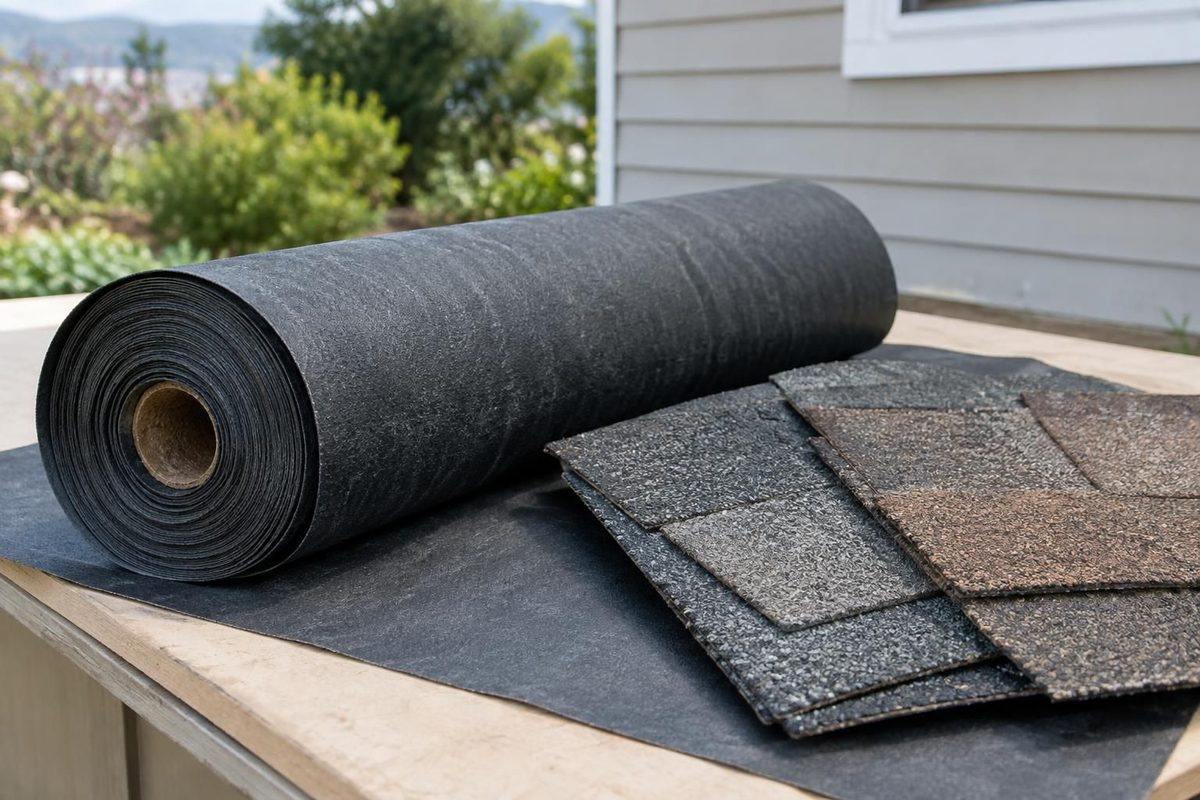
Roof underlayment sits between the roof deck and the visible covering, but the right choice depends on the complete roof assembly. For a San Rafael home, ask a roofer to explain how the proposed material fits the shingles, tiles, or other covering, and how roof transitions will be handled. The product name alone cannot establish compatibility or show whether replacement is necessary.
Start with the roof covering and the layers beneath it
Underlayment is a layer installed over the roof deck and beneath the visible covering. It is part of the roof assembly, not a standalone solution for a leak or a substitute for properly installed shingles, tiles, or other covering. A roofer needs to identify the existing materials and their condition before recommending a product or scope.
On an older roof, the exact underlayment may be difficult to identify from the ground. Records, accessible edges, or observations made during professional evaluation may help, but homeowners should not climb onto the roof or enter an unsafe attic to investigate.
Compatibility is about the whole assembly
A product that works in one roof system may not be suitable in another. The roofer should consider the covering, deck, slope, fastening method, ventilation design, and how water is directed across the roof. Manufacturer instructions and local requirements also matter; if a requirement is uncertain, confirm it with the local building department or an appropriate professional.
Ask the contractor to explain why the proposed underlayment fits the specific covering and roof conditions. A useful answer connects the material to the assembly rather than relying only on a product label or a broad claim that one option is always superior.
Transitions deserve explicit attention
Water-management details can differ at eaves, valleys, ridges, penetrations, and changes in roof plane. Those areas may call for different detailing or materials under the roof covering, depending on the design and applicable instructions. The important question is how the proposed assembly handles each relevant transition—not whether one roll of material is being used everywhere.
In Marin County, winter rain and wind-driven moisture can make sound water-shedding details especially important. Shade, fog, and debris can also affect conditions at some properties. They do not establish a defect by themselves, so a roofer should assess the actual roof rather than infer a problem from the setting alone.
Understand what replacement or repair changes
For a full replacement, the contractor can evaluate exposed roof-deck areas as work proceeds and explain how the specified layers and transitions will be installed. Ask what observations could change the scope and how any additional work would be discussed before proceeding. The answer should distinguish the planned assembly from conditions that cannot be confirmed until the roof is opened.
A localized repair may be more appropriate when the covering and surrounding assembly remain serviceable and the problem is limited. Conversely, recurring issues or widespread deterioration may justify a broader assessment. A symptom alone does not prove that replacement is needed; ask what evidence supports the recommended scope and whether a focused repair remains reasonable.
Prepare useful observations without investigating unsafely
Before an appointment, note where and when moisture appears indoors, whether it follows rain or wind, and any visible changes from the ground. Photos taken safely from indoors or ground level can help describe what you noticed, but they cannot show every roof layer or establish the source of water. Do not climb onto the roof or handle electrical equipment near moisture.
If a ceiling is sagging, keep people away and seek appropriate professional or emergency assistance. Do not puncture it. For ordinary concerns, share your notes with the roofer and ask what further assessment is needed before choosing materials or authorizing work.
Use the proposal to make the decision concrete
A clear proposal should identify the intended roofing assembly, explain where special details apply, and describe the limits of what can be confirmed before work begins. If the roof has more than one covering type or complicated transitions, ask how those areas are addressed. If the work is partial, ask how the new materials will meet the existing roof and what compatibility concerns remain.
The goal is not to choose underlayment by name alone. It is to understand the reason for the selection, the conditions it is intended to suit, and the questions that still depend on a professional’s evaluation of the property.
Questions to bring to a roofing appointment
- What roof covering and underlayment are present, and how certain is that identification?
- Is the proposed underlayment compatible with the existing or planned covering and roof deck?
- Which areas need different treatment, such as valleys, eaves, or other transitions?
- How will the full assembly manage water, ventilation, and moisture under the conditions at this property?
- What manufacturer instructions and local requirements should be checked for this specific assembly?
- If only part of the roof is being worked on, how will the new and existing materials meet?
Questions about this approach
Is one type of roof underlayment best for every home?
Not necessarily. The appropriate choice depends on the covering, roof design, condition, installation instructions, and local requirements. Ask the roofer to explain the basis for the recommendation on your specific roof.
Can replacing underlayment by itself fix a roof leak?
No. Underlayment is one layer in a roof assembly. A leak or visible damage needs an assessment of the covering, transitions, and surrounding materials; the symptom alone does not identify which layer is responsible.
What if the contractor names a product but does not explain the installation?
Ask for the proposed assembly, the details planned at relevant transitions, what is included in the work, and what conditions may require a change in scope. Request clarification before authorizing work if those points are unclear.
For help applying this approach, explore our roofing services and materials.
Talk with Able Roofing about your roof
Share the symptoms, property details and questions you want answered. Request a roofing estimate, email jon@ableroofing.biz, or call (415) 786-7308.