
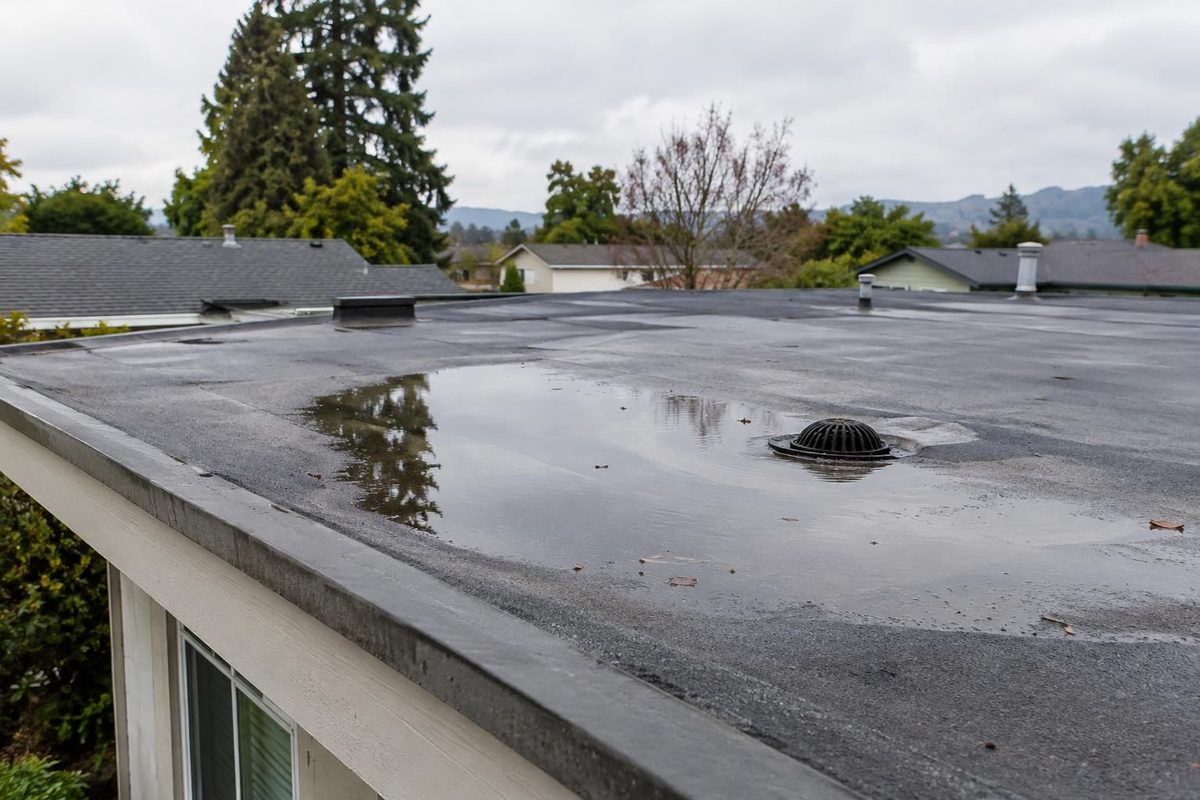
Standing water on a low-slope roof can point to a drainage obstruction, an uneven surface or another condition, but a single observation cannot identify the cause. Note where the water collects, how long it remains and whether interior symptoms accompany it, using only safe indoor or ground-level views. If pooling recurs or persists, request a roofer’s assessment that considers drainage, slope and the roof’s supporting structure together before deciding between repair and replacement.
Why the location and duration of water matter
A shallow pool visible soon after rain does not, by itself, establish a roof defect. Some low-slope roofs may retain a limited amount of water temporarily, while water that persists or repeatedly collects in the same place deserves closer assessment. The roof’s design, drainage layout, age and condition all affect what is significant.
From a safe indoor or ground-level viewpoint, note the approximate area and whether the water remains after dry weather. Do not go onto the roof to measure depth or check how quickly it drains. A qualified roofer can compare the observation with the roof’s intended drainage path and condition.
Drainage and slope are connected
A drain, scupper or outlet may be obstructed, damaged or poorly matched to how water reaches it. Debris carried by wind or nearby trees can contribute, but a visible blockage is only one possible factor. Water may also collect where the roof surface has uneven areas or where drainage paths are restricted.
Slope is the roof’s fall toward drainage points. A roofer assesses whether the surface appears to direct water as intended, and whether changes, wear or earlier repairs affect that path. Clearing an outlet alone may not address water that repeatedly pools elsewhere. Conversely, a localized drainage issue does not automatically mean the whole roof needs replacement.
When to request a professional assessment
Ask for an assessment if standing water persists beyond the immediate post-rain period, returns to the same area, appears to be increasing, or accompanies interior staining, dampness or bubbling finishes. In Marin County, winter rain and periods of wind-driven moisture can make recurring drainage concerns more noticeable; shade and debris may also affect particular properties.
If a ceiling sags, water is near electrical equipment, or the building shows signs of serious damage, keep people away from the affected area and seek appropriate emergency or professional assistance. Do not puncture a sagging ceiling or handle electrical equipment near water. For less urgent observations, a roofer can determine whether a repair, drainage work or further evaluation is appropriate.
Why the roof assembly and structure belong in the conversation
The roof assembly includes the surface membrane or covering, layers beneath it, insulation, and supporting structure. Persistent water can raise questions about more than the visible surface: a roofer may evaluate seams, penetrations, drain details, surface condition and signs of deterioration, as well as whether the roof’s shape and support appear consistent with its design.
These factors are related but not interchangeable. A drainage correction may be enough in one case; in another, the covering may need localized repair or a broader assessment of underlying conditions. A homeowner cannot reliably infer structural damage from a pool of water alone. If a roof appears visibly bowed or a ceiling is changing shape, keep clear and arrange prompt professional evaluation.
What a roofer may evaluate and how to compare options
A qualified roofer can review the drainage layout, water paths, visible roof condition, previous work and any reported interior effects. The roofer may need appropriate access to assess details that cannot be seen from the ground. The method and scope should reflect the roof’s materials, condition, manufacturer instructions and applicable local requirements.
When discussing recommendations, ask what observation supports each proposed repair, whether it addresses the apparent source or only a symptom, and what remains uncertain. If replacement is suggested, ask which conditions make a repair inadequate and whether a limited repair or further assessment could reasonably be considered first. The answer should connect the recommendation to the roof’s actual condition rather than to ponding as an isolated sign.
A practical record helps the appointment
A concise timeline can help distinguish an occasional observation from a recurring pattern. Include dates, recent weather if known, the area where water is visible, and any interior symptoms. Share prior repair information or photographs taken from a safe, consistent viewpoint. Images can help describe what you saw, but they cannot confirm roof condition or identify a hidden cause.
Before the visit, ask what access is needed and whether the roofer wants any additional information. Do not climb up to take closer photographs, move equipment, or attempt to clear drains. If conditions change before the appointment—especially if a ceiling sags or an electrical hazard appears—treat that as a safety concern rather than waiting for a routine visit.
What to note before requesting an assessment
- Record where and when you notice standing water, using a safe view from inside or from the ground.
- Note whether the water remains after dry weather or appears only during or shortly after rain.
- Look for visible drain or scupper blockage from a safe location; do not climb onto the roof to clear it.
- Photograph the roof area from an existing safe viewpoint, without treating images as a substitute for inspection.
- Tell the roofer about interior stains, ceiling changes, or prior repairs and when they occurred.
- Ask whether the proposed next step is a localized repair, drainage correction, or broader roof and structural assessment.
Questions about this approach
Does any standing water mean the roof needs replacement?
Not necessarily. The significance depends on the roof design, how long water remains, whether the same area repeatedly collects it, and the condition of the roof and drainage system. A roofer can assess those factors before recommending repair or replacement.
Can I determine the cause from a photo?
No. A safe photograph can help show where and when you noticed water, but it cannot establish the roof’s slope, hidden condition or structural integrity. Do not climb onto the roof to get a closer view.
What should I ask when scheduling a roofer?
Share when you saw it, whether it recurs, where it appears to collect, any interior symptoms, and information about past repairs. Ask what the roofer will evaluate and what findings would support each proposed next step.
For help applying this approach, explore our roof repair in San Rafael.
Talk with Able Roofing about your roof
Share the symptoms, property details and questions you want answered. Request a roofing estimate, email jon@ableroofing.biz, or call (415) 786-7308.