
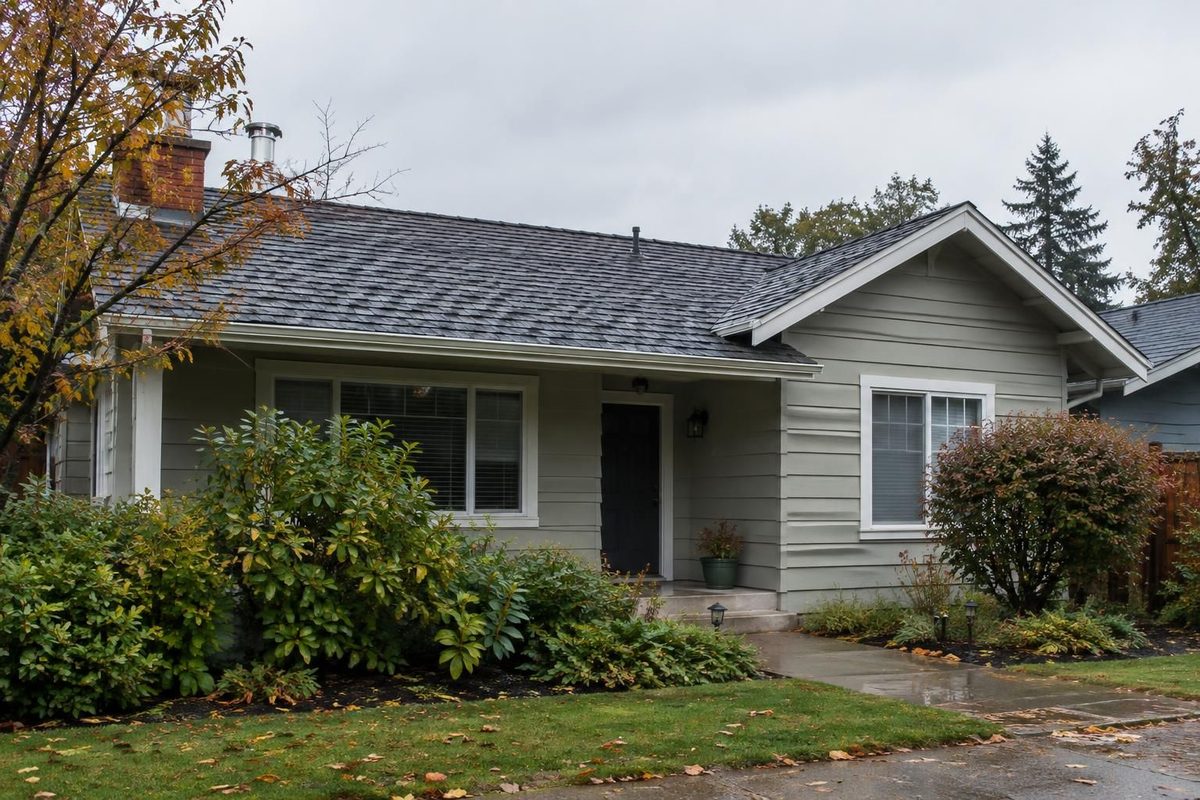
Roof replacement timing around rainy weather depends on the work stage, roof conditions, materials, and forecast—not just the chance of a shower. In San Rafael, ask the roofer what work must wait for suitable dry conditions, how the exposed roof will be protected if weather changes, and who will communicate schedule adjustments. Confirming these points before scheduling helps you plan without assuming a fixed completion date.
Rain affects different stages differently
A replacement schedule is not simply a choice between working or waiting for rain. Crews may be able to complete some preparation or site-protection tasks in uncertain weather, while removing existing roofing or installing exposed layers may require suitable dry conditions. The sequence depends on the roof design, materials, work scope, and manufacturer instructions.
Winter rain and wind-driven moisture are practical considerations in San Rafael, but a cloudy forecast does not by itself determine whether a specific task is safe or appropriate. Ask the contractor which stages depend on a dry roof surface and which can proceed without exposing the building.
Ask how the contingency plan works
A useful plan explains what happens if rain is forecast before work starts, arrives while work is underway, or delays the next stage. It should identify who makes the weather decision, how you will be notified, and whether the work will be paused before the roof is opened.
Temporary protection can reduce exposure during a delay, but it is not a guarantee against water entry. Ask what protection is planned for the particular roof and scope, who is responsible for checking it, and how the crew will decide whether conditions are suitable to continue. Avoid assuming that a general promise to cover the roof answers these details.
Understand what schedule uncertainty means
Weather can shift the start date, interrupt work, or affect when a project can be completed. A reasonable schedule discussion separates the planned sequence from the factors that may change it. Ask how a delay affects the next workday, material deliveries, site access, and any follow-on trades or household arrangements.
Clarify how schedule changes will be shared and whether you should expect a revised estimate of timing after conditions improve. A precise completion date may be difficult to confirm while the forecast remains unsettled. The important point is to understand the communication process, not to expect a weather-dependent date to be certain.
Prepare the property without taking roof risks
Before the appointment, note any rooms where you have seen signs of moisture and when you noticed them. From a safe indoor location, you can also note whether a visible ceiling mark appears to change after rain. Outside, observe the roof and drainage from the ground only; do not climb up to check coverings or temporary protection.
Tell the contractor about access constraints, pets, vehicles, fragile outdoor items, and any concerns about water entering the home. If a ceiling is sagging, keep people away from the area and seek appropriate professional assistance. If water is near electrical equipment, do not handle it; keep clear and contact qualified help.
Confirm scope and responsibility in writing
Before work begins, make sure the written scope identifies the anticipated work stages and explains how weather interruptions are handled. Ask whether temporary protection is included, who is responsible for it, and what the next step is if conditions change. If the roof has complex transitions, skylights, or other penetrations, ask how those areas will be protected when work pauses.
If the proposal does not address weather, request clarification rather than assuming a particular practice. The roofer should be able to explain how the plan fits the roof and the selected materials. A small repair or additional assessment may be more appropriate than a full replacement in some situations; weather planning does not itself establish that replacement is needed.
Use a short pre-start check
A brief conversation before scheduling can surface gaps in the plan. Keep the discussion specific to your property and ask for clear answers on communication, protection, and responsibility. If any answer depends on the roof conditions found after work begins, ask how that decision will be documented and explained.
Questions to settle before scheduling
- Which work stages can proceed in wet or windy conditions, and which must stop?
- Who monitors the forecast and communicates a schedule change?
- What temporary protection is planned if the roof is opened and weather shifts?
- Who is responsible for checking, maintaining, and removing temporary protection?
- How will the crew protect and access the home, driveway, and outdoor areas during a delay?
- What conditions must be met before work resumes?
Questions about this approach
Does light rain always mean roof replacement work stops?
Not necessarily. Whether a particular task can proceed depends on conditions at the roof, the work stage, and material requirements. Ask the contractor which tasks may continue and which require suitable dry conditions.
Can temporary covering guarantee the home stays dry during a delay?
Ask what protection is intended for the roof and the specific work area, who is responsible for checking it, and how the crew will respond if conditions worsen. Temporary protection can reduce exposure but cannot guarantee that water will not enter.
What if rain is already causing a serious problem before the scheduled start?
The contractor should explain what they can assess and how they will communicate any change in schedule. For a serious active leak, sagging ceiling, or water near electrical equipment, keep clear of the hazard and seek appropriate professional or emergency assistance rather than waiting for routine scheduling.
For help applying this approach, explore our roof replacement in San Rafael.
Talk with Able Roofing about your roof
Share the symptoms, property details and questions you want answered. Request a roofing estimate, email jon@ableroofing.biz, or call (415) 786-7308.