
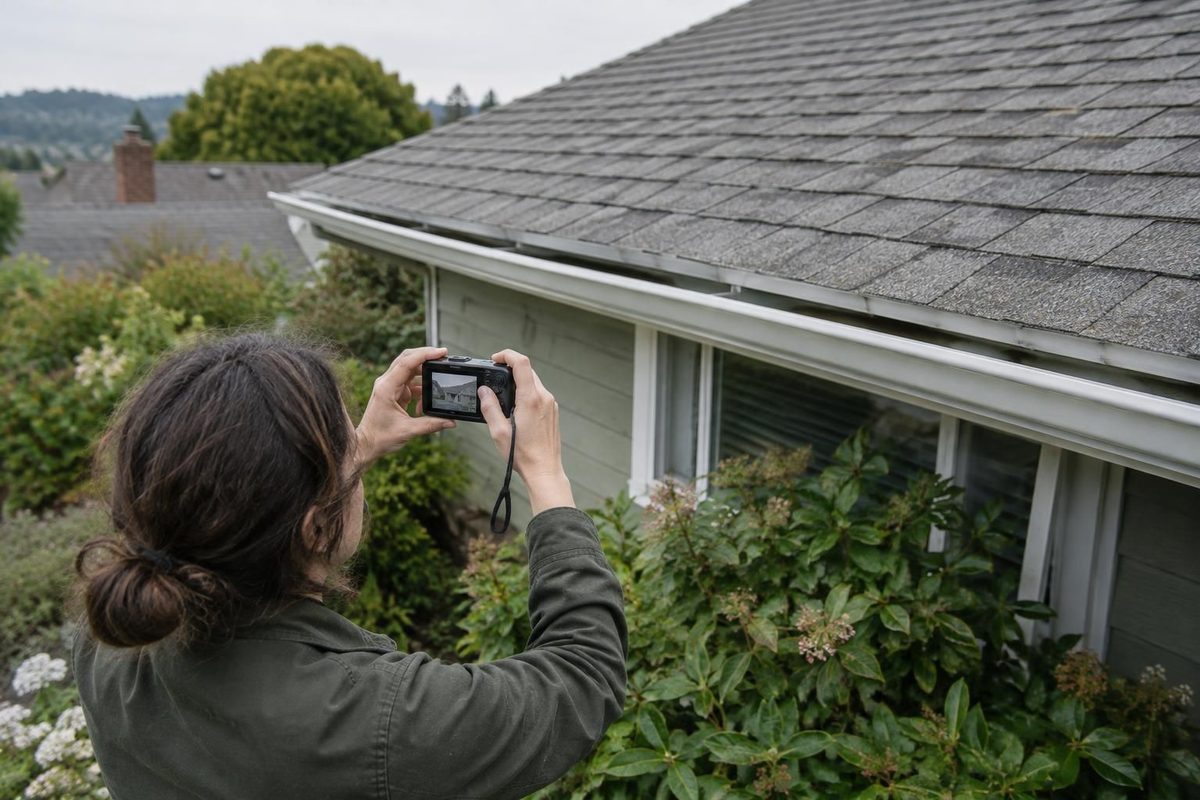
Roof maintenance photos are most useful as a dated record of visible conditions, not as a substitute for a roof inspection. From a safe ground-level or indoor viewpoint, take clear pictures from consistent angles and note the weather, location and reason for each image. That context can help a San Rafael roofer understand what you noticed, compare changes and plan a focused service appointment—without asking you to diagnose the roof yourself.
Build a repeatable record without turning photos into a diagnosis
A dated image can help show whether a visible condition appears to have changed. It cannot establish what is happening beneath the roofing or prove that a roof is sound. Keep the purpose narrow: document what is visible from a safe location so you and a roofer can discuss it more clearly.
In San Rafael, seasonal rain and wind may make it useful to note when an image was taken and what conditions came before it. Shade, fog or nearby debris can affect what is visible, but none of those conditions alone identifies a defect.
Choose viewpoints you can safely repeat
Photograph from the ground, a window or another stable indoor location. Do not climb onto the roof or lean out of an opening for a better angle. If a detail cannot be seen safely, record its general location and ask the roofer to assess it.
A wide view helps orient the reader: include the relevant side of the house and roofline. If a visible concern is apparent from the same safe position, take a closer image only when you can do so without entering a hazardous area. Avoid relying on zoomed or blurry images that conceal context.
Keep dates, weather and observations together
Use the original photo date where available, and add a short note if the image was copied or sent through a service that may alter file information. A simple log can include the view, date, recent weather and what prompted the picture—for example, a mark noticed indoors after rainfall or debris visible near an edge.
Separate what you saw from what you suspect. “Dark mark on the ceiling below the rear roof slope” is more useful than “failed flashing” if no professional has confirmed the cause. Water can travel before becoming visible indoors, and a picture of the room does not pinpoint the entry point.
Compare like with like, but note what the camera misses
When reviewing images over time, compare similar angles and lighting. A roof may look different when wet, shadowed or photographed from farther away. Do not treat color shifts, reflections or a single apparent mark as proof of deterioration.
Photos also leave out details such as concealed layers, fasteners, drainage pathways and the condition around penetrations. A qualified roofer can assess accessible areas and explain what the images do and do not help establish. If a small visible issue is isolated, a repair or further assessment may be more appropriate than assuming the whole roof needs replacement.
Prepare a focused handoff for the service appointment
Select a few clear, relevant images rather than sending a large unsorted collection. Tell the roofer where each view was taken and what changed, if anything. Mention whether the concern appeared after rain or wind, whether it recurred, and whether there are interior signs such as a stain or damp material.
Ask what the inspection can evaluate, which areas may not be safely accessible, and whether any recommended work is based on the photos, the inspection, or both. If there is active water near electrical equipment, keep clear and seek appropriate professional assistance; do not handle wet switches or fixtures.
A useful photo log for a roof appointment
- Record the date and approximate time for each image.
- Use the same safe ground-level viewpoints when possible.
- Photograph the whole roofline before taking closer pictures of visible details.
- Note weather and recent conditions, such as rain, wind, fog or heavy debris.
- Describe what changed without guessing at the cause.
- Keep original files and share relevant images with the roofer before or during the appointment.
Questions about this approach
Can roof photos replace an inspection?
No. Images can document visible changes and help explain your concern, but they cannot show concealed roofing layers or confirm the roof’s overall condition. A qualified inspection is needed to assess what can be safely evaluated.
Should I send roof photos before the appointment?
Keep the original files when practical, share only relevant images through the roofer’s preferred method, and avoid posting pictures that reveal personal or security-sensitive details. Ask how the company handles submitted images if that matters to you.
What if the roof looks damaged but I cannot photograph it safely?
Do not approach or photograph a dangerous area. Keep people away from sagging, loose materials or electrical hazards, and contact appropriate professionals. Share any safe, existing images instead of trying to get a closer view.
For help applying this approach, explore our roof inspections.
Talk with Able Roofing about your roof
Share the symptoms, property details and questions you want answered. Request a roofing estimate, email jon@ableroofing.biz, or call (415) 786-7308.