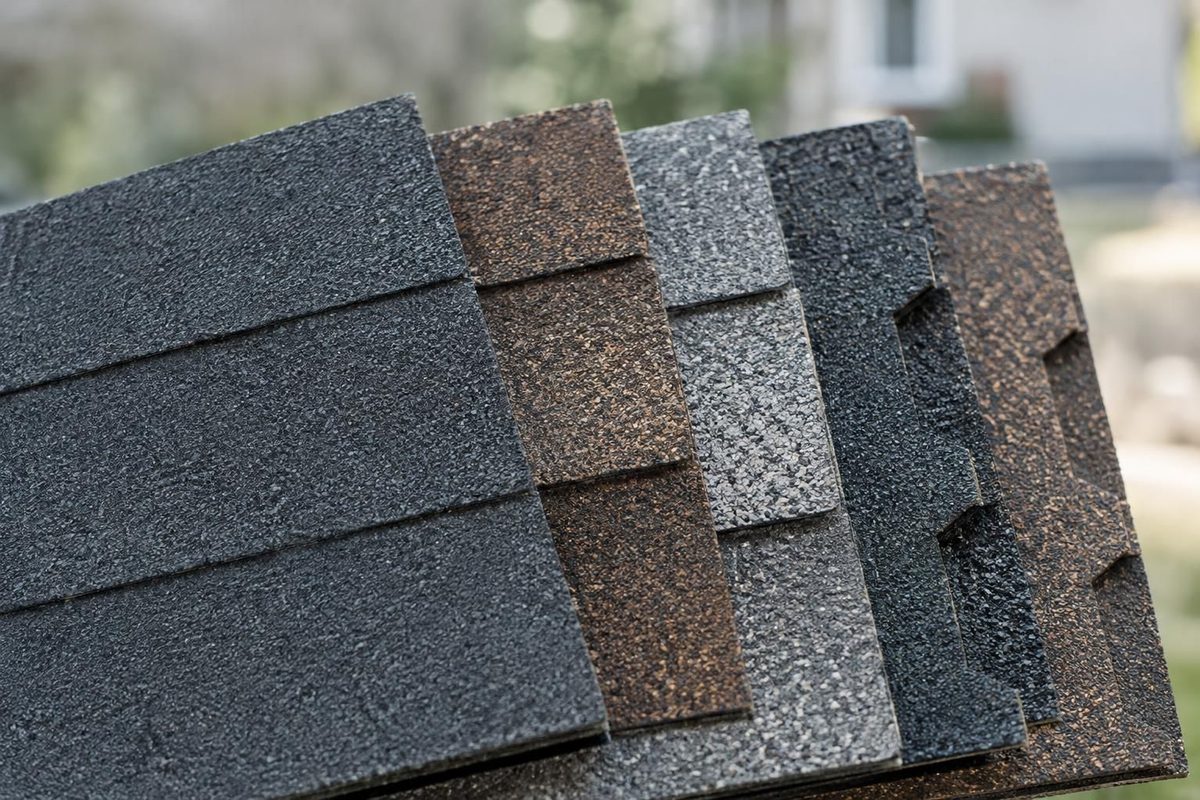
Composition shingles come in flatter, more regular profiles and thicker-looking dimensional designs, with differences in pattern, shadow and curb appeal. For a San Rafael home, compare samples in the property’s light and ask how the proposed profile fits the roof’s slope, drainage and complete assembly. Profile is a visual and product-design choice; it does not, by itself, establish that a roof will perform better.
Profile changes the roof’s visual texture
A composition shingle is made from a reinforcing base coated with asphalt and surfaced with mineral granules. The word “profile” generally describes the shingle’s shape, thickness, dimensions and pattern once installed. Samples can look quite different in a small display from how their repeated courses read across an entire roof.
A basic three-tab profile has a flatter, more regular pattern, while dimensional or architectural profiles use overlapping layers and varied cutouts to create more shadow and visual depth. Some products have distinctive shapes intended to suggest other roofing styles. That appearance is an aesthetic choice, not proof of greater suitability or performance.
Consider the whole building, not only the sample
In San Rafael, a home’s roof may be viewed from close by, from a sloped street or against trees and neighboring buildings. Look at samples outdoors in different light if possible: color can shift under direct sun, overcast skies and shade. Compare the proposed profile with the home’s proportions, siding, trim and any roof sections that will remain.
A thick, high-contrast pattern may draw attention to a roof with many hips, valleys or dormers. A quieter pattern may blend more easily with a simple roofline. Neither is automatically the better choice. Ask the roofer to explain how the selected color and pattern will appear across the full roof, while recognizing that a small sample or rendering cannot reproduce every lighting condition.
Profile alone does not determine roof performance
Shingles are one part of a roof assembly. Underlayment beneath the shingles, flashing at walls and penetrations, edge details, ventilation, installation quality and drainage all affect how the system handles water and weather. A visually substantial profile cannot compensate for an unsuitable assembly or poor detailing.
The roof’s slope, existing condition and structural capacity also matter. A qualified roofer should check whether the proposed product is appropriate for the roof configuration and follow the product manufacturer’s installation instructions. If an old roof shows damage, that finding deserves a separate assessment; choosing a different profile does not by itself resolve underlying problems.
Match the choice to site conditions
Marin’s winter rain, wind-driven moisture, fog, shade and falling debris can affect buildings differently. A roof surrounded by trees may collect leaves in valleys or gutters, while another property may have more open exposure. These conditions make sound drainage and careful detailing important, but they do not identify a single shingle profile as right for every home.
Ask how the contractor evaluated the roof’s slope, ventilation, drainage paths and transitions before recommending a product. If sections of the roof are shaded or remain damp, ask whether the condition of the existing roof and the maintenance plan affect the choice. Avoid relying on broad claims about durability without knowing the specified product, assembly and installation requirements.
Read the proposal as a system specification
A proposal should make it possible to identify the shingle product and profile, color, areas included and significant components of the assembly. Check whether it describes underlayment, flashing, roof-edge treatment, ventilation work and disposal where applicable. The exact scope depends on the roof; the purpose is to make clear what is being proposed rather than assume every job includes identical details.
If one proposal names a shingle profile while another uses a different product or leaves components vague, ask for clarification before comparing them. A lower-detail description may reflect an incomplete scope rather than a meaningful material advantage. Ask what conditions could change the recommendation and how any additional work would be communicated.
Use a small sample thoughtfully
Place samples where they can be viewed safely from the ground, against the home’s exterior colors and in both sun and shade. Compare more than the darkest or lightest option: look at the overall pattern, contrast and how the texture relates to the home. Do not climb onto the roof to inspect or test samples.
If the existing roof has isolated trouble spots but is otherwise in serviceable condition, ask whether a targeted repair or further assessment is more appropriate than replacing the entire roof. A material selection discussion is most useful once the scope is clear: replacement decisions should account for roof condition and system requirements, not just a preferred appearance.
Questions to compare shingle profiles
- Which profile and dimensions are being proposed, and how will the finished roof look from the street?
- Are the samples representative of the exact color and product being specified?
- What underlayment, flashing, edge details and ventilation are included in the complete roof assembly?
- Are the proposed shingles compatible with the roof’s slope and existing structure?
- How will the contractor address transitions, valleys and penetrations where details matter as much as the field shingles?
Questions about this approach
Does a thicker-looking shingle automatically last longer?
Not necessarily. A dimensional profile changes the appearance and product design, but performance depends on the specified shingle, the entire roof assembly, compatibility with the roof and correct installation. Compare documented product details and scope rather than treating thickness or appearance as a guarantee.
Should I choose a profile before deciding whether to replace the roof?
Ask whether the existing roof can be repaired and assessed further, or whether its condition and assembly make replacement appropriate. A roofer should explain the observed conditions supporting the recommendation and whether a profile choice affects the proposed system. A material preference alone does not establish the need for replacement.
For help applying this approach, explore our roofing services and materials.
Talk with Able Roofing about your roof
Share the symptoms, property details and questions you want answered. Request a roofing estimate, email jon@ableroofing.biz, or call (415) 786-7308.