
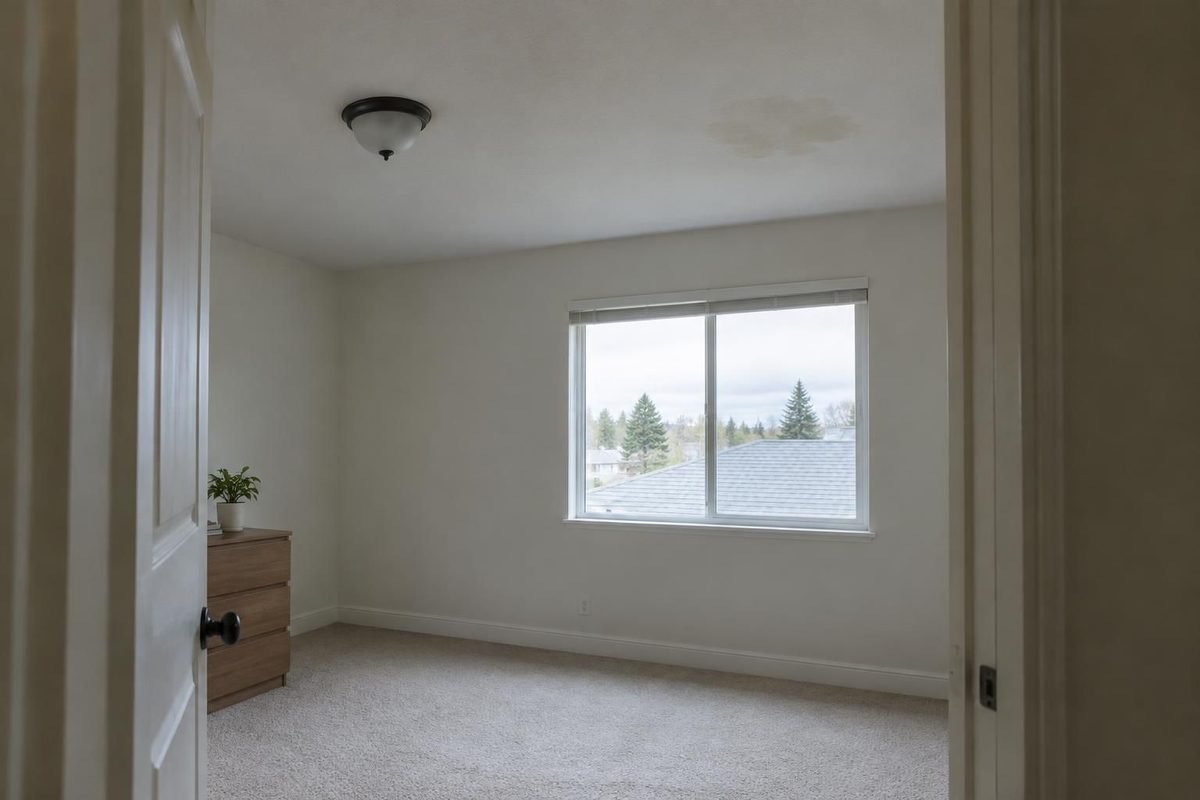
A ceiling stain does not necessarily sit beneath the roof opening that let water in. Moisture can travel along framing or between building layers before it appears indoors, so location is a clue—not a diagnosis. In San Rafael, note when the mark changes and what you can safely observe; a roofer can use those details to investigate the likely route and explain whether a localized repair or further assessment makes sense.
Why the stain may not mark the roof opening
Water can enter through a roof defect and move along the underside of the roof covering, framing, insulation, or other building materials before it reaches a ceiling. Gravity guides it downward, but framing, joints, and changes in material can redirect it sideways. The visible mark may therefore form well away from the original entry point.
The route depends on the roof and the layers beneath it. A valley, vent, chimney, roof-to-wall transition, or fastener may be a possible entry area, but a stain’s position alone does not identify which one is involved. In some buildings, water can travel along a rafter or other framing before dripping onto a ceiling surface.
Timing offers clues, not proof
Note whether the mark grows during steady rain, after wind-driven rain, or at another time. Wind can push moisture into vulnerable joints that may stay dry in calmer weather. A delayed appearance can also reflect water accumulating in materials before it becomes visible indoors. These patterns help a roofer narrow the investigation, but they do not confirm a cause by themselves.
If the ceiling becomes wet during a dry spell, consider other possible sources, such as plumbing or equipment above the area, where applicable. A roofer may need to coordinate with another qualified trade if observations point away from the roof. Avoid treating a dry-weather leak as proof that the roof is sound or at fault.
Indoor observations that help explain the problem
From a safe indoor position, document the mark’s size, shape, and location, and whether it changes. A dated photograph can make gradual changes easier to compare. You can also note nearby peeling paint, damp trim, odors, or water on the floor. Do not cut into the ceiling or remove fixtures to look for a route.
If water is actively dripping, move belongings only when it is safe to do so. Keep away from wet light fixtures, outlets, and other electrical equipment, and do not touch them. A bulging or sagging ceiling can fail without warning: keep people out of the area and seek appropriate emergency or professional assistance. Never puncture it to release water.
What a roofer may check
A qualified roofer can compare the indoor location and timing with the roof layout, then assess plausible entry points and water paths. The evaluation may include roof transitions, penetrations, drainage routes, and the condition of roofing materials, as well as relevant accessible areas beneath the roof when safe. On some roofs, debris or drainage problems can contribute to moisture exposure; on others, they may be unrelated.
A professional should explain which observations support the suspected source and what remains uncertain. Water damage can make an inspection more complex, and a single visible symptom may have more than one possible explanation. If the evidence is inconclusive, ask whether further monitoring or a more focused assessment is warranted before authorizing broad work.
Choosing a repair scope without overcommitting
A localized repair may be appropriate when the likely entry point is identifiable, the surrounding roof is in serviceable condition, and the repair can address the relevant detail. The visible ceiling stain may still need separate interior evaluation; repairing the roof does not automatically resolve damaged drywall, insulation, or paint.
Broader work or replacement may merit discussion if assessment finds widespread deterioration, repeated failures, or a roof system that cannot be reliably repaired in the affected area. One stain alone is not enough to justify replacement. Ask what specific findings support the proposed scope, what alternatives were considered, and how the roofer will distinguish roof work from interior restoration.
A useful appointment conversation
For a San Rafael home, winter rain and wind-driven moisture may help explain when a leak appears, while shade or nearby debris can matter at some properties. Conditions vary from roof to roof, so share observations rather than assuming a common local cause. Provide the roofer with photos, dates, and any known recent work on the roof or nearby systems.
Ask the roofer to describe the suspected water path in plain language, the evidence for the entry point, and whether any other source should be ruled out. Confirm what the proposed repair includes and what would lead to a revised scope if concealed conditions are found. Those answers help you decide whether a focused repair, additional assessment, or wider work is justified.
What to note before requesting a roof assessment
- Photograph the ceiling mark from a safe position and note when it first appeared.
- Record whether it changes during rain, wind, or dry weather; do not assume timing identifies the entry point.
- Look for related clues indoors, such as damp trim, peeling paint, or a musty odor, without opening walls or ceilings.
- From the ground, note roof features near the general area, such as valleys, vents, chimneys, or roof-to-wall joints.
- Move belongings away from active drips if safe, and keep clear of wet electrical fixtures or a sagging ceiling.
- Ask the roofer to explain how the suspected entry path relates to the indoor mark and what evidence supports the repair scope.
Questions about this approach
Does a ceiling stain show exactly where the roof is leaking?
No. Water can travel along framing or between building materials before reaching the ceiling. The indoor mark helps guide the investigation, but it does not reliably locate the roof opening on its own.
Can a roofer identify the entry point from the stain location alone?
Not necessarily. A stain’s location may point toward an area to investigate, but water can move sideways before becoming visible. A roofer should assess likely entry points and explain the evidence connecting them to the indoor symptom.
What should I do if the ceiling is bulging or water is dripping near a light?
If there is active dripping, keep clear of wet electrical fixtures and move belongings only if safe. If the ceiling is bulging or sagging, keep people away and seek appropriate emergency or professional assistance. Do not puncture the ceiling.
For help applying this approach, explore our roof repair in San Rafael.
Talk with Able Roofing about your roof
Share the symptoms, property details and questions you want answered. Request a roofing estimate, email jon@ableroofing.biz, or call (415) 786-7308.