
After solar, HVAC, painting, or other exterior work near a roof, keep a dated record of the work, safe ground-level photos, and any new interior symptoms. Ask what areas the contractor accessed, but don’t assume the work caused damage: a later stain or leak can have several explanations. If you notice a new leak or visible change, share the record with a qualified roofer and ask whether an assessment is appropriate.
Why a record matters even when nothing looks wrong
Work near a roof can involve different levels of access. Solar installation may involve roof attachments, while HVAC work may be limited to equipment or ducts; painting and other exterior projects may happen near eaves, gutters, or wall-to-roof transitions. A record helps you explain what was done and when if a concern appears later.
Documentation does not establish that the other work caused a roof problem. A stain may reflect an older leak, condensation, plumbing, or water traveling from a different point. Likewise, no visible change from the ground cannot confirm that every roof component is sound. Treat notes and photographs as context for a qualified assessment, not a diagnosis or proof of fault.
Capture the work scope and timing
Keep the contractor’s work order, completion note, and any photographs they provide. Write down the dates work began and ended, the general area involved, and whether the contractor says roof coverings, flashing, gutters, vents, or rooftop equipment were accessed. If the work was near the roof but did not involve roof access, note that distinction too.
Ask the contractor to identify the areas they worked near and whether they noticed an existing concern or made any change to a roof-related component. Keep the question neutral: you are clarifying the scope, not assuming damage occurred. If the answer is uncertain, record that rather than filling in the gaps yourself.
Take useful, safe photographs
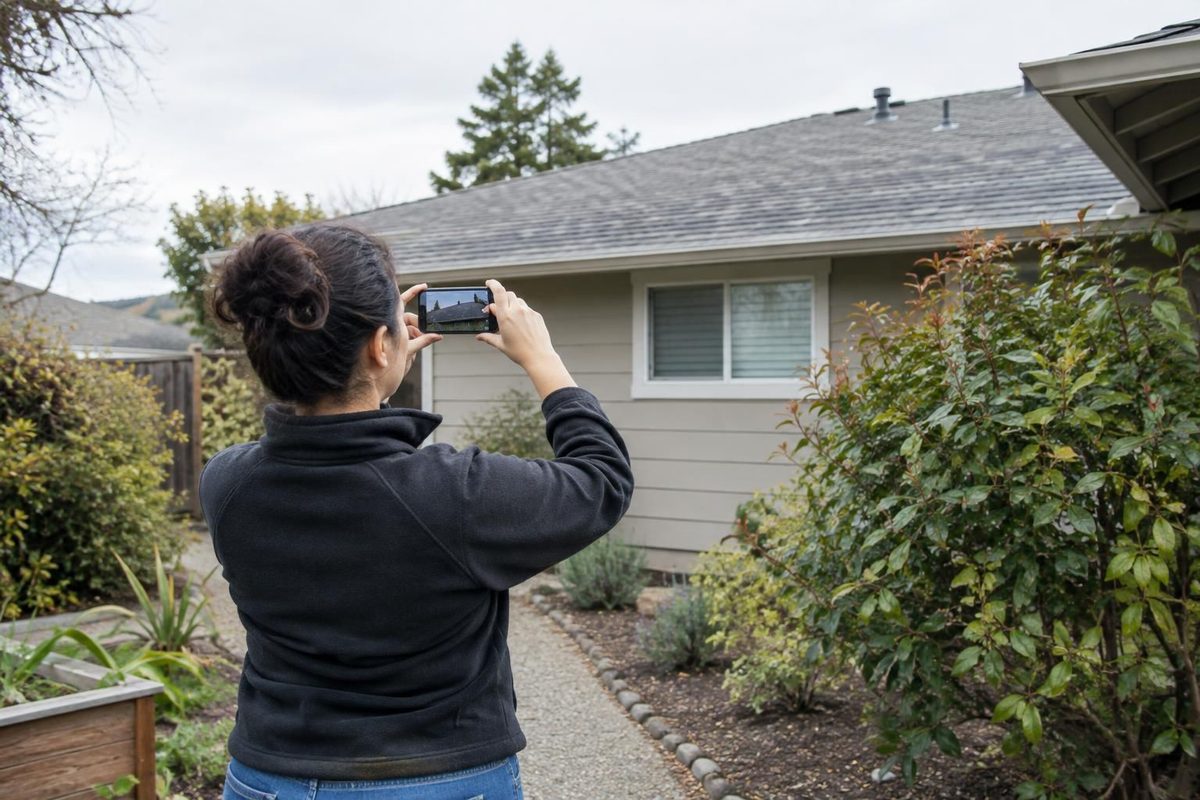
From the ground or another safe location, photograph the general roofline and the exterior area near the work. Include enough surrounding detail to identify the location later. A second, closer ground-level view may help document an observable change, but do not climb a ladder or roof, lean out of a window, or enter an unsafe space for a better angle.
If you already have comparable photos from before the work, retain the originals and note their dates. Avoid editing images in ways that hide details; if you crop a copy for sharing, keep the original. A roofline photo can show visible context, but it usually cannot reveal concealed flashing, fasteners, underlayment, or the condition beneath a roof covering.
Watch for changes without trying to locate the source
From indoors, note the room and exact area where a stain, drip, peeling finish, or unusual damp smell appears. Record when you first noticed it, whether it changes during or after rain, and whether it appears during dry weather too. Winter rain and wind-driven moisture can make a new symptom more noticeable, while shade, fog, and debris can affect drying or roof conditions at some properties; none of these observations identifies the entry point on its own.
If water is near a light fixture or other electrical equipment, keep away and seek appropriate professional assistance. For a sagging ceiling or serious damage, keep people out of the affected area and get urgent professional help. Do not puncture a ceiling, handle electrical equipment near water, or enter an unsafe attic to investigate.
Decide whether to request a roof assessment
A new active leak, an apparent change at the roof edge, or a concern reported by the contractor can be a reason to ask a qualified roofer whether an assessment is warranted. Share the work dates, contractor’s description, safe photographs, and any indoor symptom timeline. Be clear about what you know and what remains uncertain.
If you have no new symptoms or visible changes, keep the records with your property documents and monitor from safe locations rather than assuming a problem exists. A roofer can determine whether the reported area and roof assembly merit closer evaluation. Depending on the findings, a focused repair or further assessment may be more appropriate than replacement; one symptom alone does not establish that a roof needs replacing.
Make the assessment useful
When arranging an assessment in San Rafael, explain what work occurred, where it was performed, and when any change was noticed. Share original photos and documents in advance if requested. Tell the roofer about access limits or areas that may be difficult to view, rather than attempting to clear or reach them yourself.
Ask what parts of the roof the roofer plans to evaluate and whether the reported concern could involve another building system, such as plumbing or HVAC. If the source is unclear, ask what additional information or assessment would help distinguish possibilities. A careful answer may identify uncertainty or recommend another qualified professional; that is more useful than treating timing alone as proof of cause.
A simple record to keep after nearby exterior work
- Note the work dates, contractor type, and areas of the property where work took place.
- Save the work order or description of the completed work, if available.
- Photograph the roofline and nearby exterior from the ground before and after, using the same safe vantage point when practical.
- Record any new interior stain, drip, odor, or change in a ceiling or wall, including when it appeared and the weather at the time.
- Ask the contractor what roof areas or components were accessed or disturbed, and keep the answer in writing.
- If you notice a leak or visible change, share the observations with a qualified roofer and ask whether an assessment is appropriate.
Questions about this approach
Does a leak that starts after exterior work mean that work caused it?
No. Timing is useful context, but it does not prove cause. A roofer can assess the reported area and consider other possible sources; the contractor’s scope and dated observations may help that review.
How should I organize the photos and work documents?
Save the original files, note when and where each photo was taken, and keep the contractor’s work description with them. Send copies when requested and retain the originals with your property records.
What if I cannot safely see the area where work took place?
Avoid roof access and unsafe attic entry. If a new leak, visible damage, or another concerning change appears, describe it to a qualified roofer and ask whether an assessment is needed. Keep people away from sagging ceilings or serious damage and seek appropriate professional assistance.
For help applying this approach, explore our roof inspections.
Talk with Able Roofing about your roof
Share the symptoms, property details and questions you want answered. Request a roofing estimate, email jon@ableroofing.biz, or call (415) 786-7308.