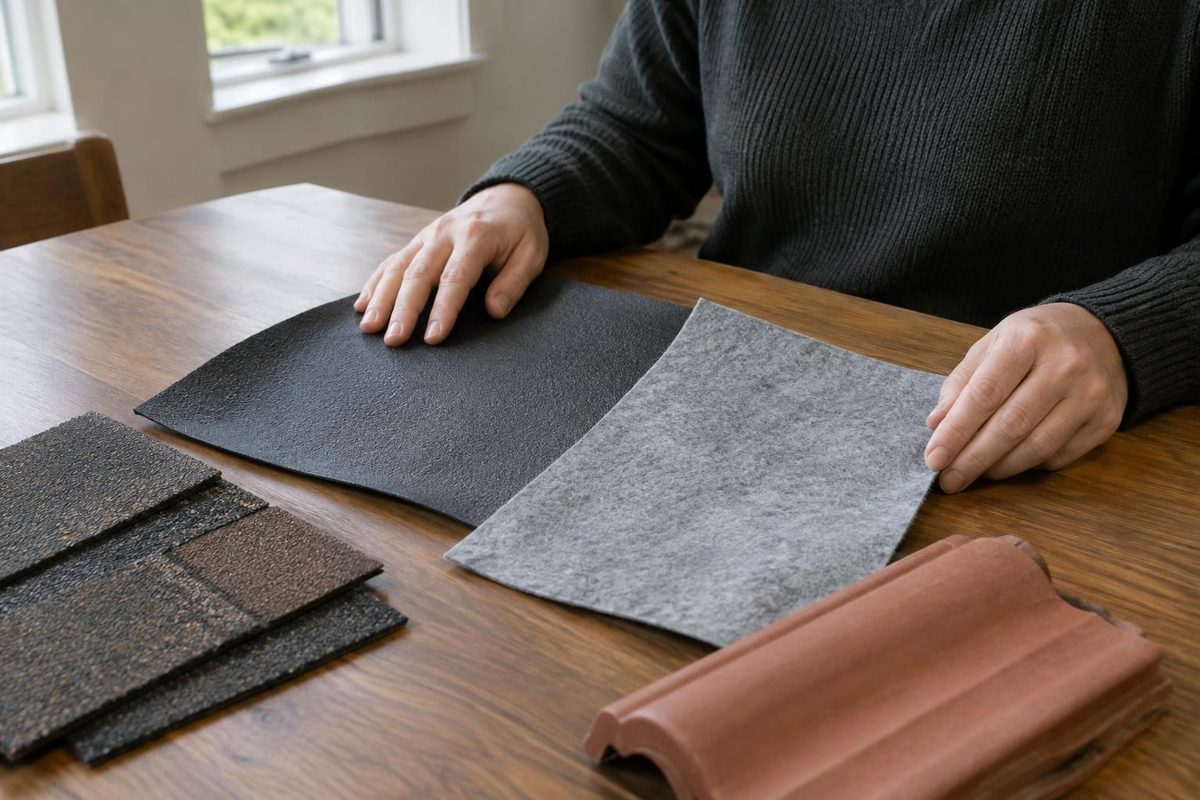
For a San Rafael roof replacement, compare underlayment by how it fits the roof assembly—not by product name alone. Underlayment lies beneath the roof covering and can provide a secondary water-shedding layer, but its suitability depends on the covering, slope, roof details, existing conditions, and product instructions. Ask what is specified, where it will be used, and why it matches the proposed assembly.
Underlayment is a secondary water-shedding layer
Roof underlayment sits beneath the visible roof covering. Depending on the roof assembly, it can provide a secondary layer to help manage water that gets past shingles, tiles, or another covering. It is not a substitute for sound flashing, correctly installed roof covering, or drainage that carries water away.
The term covers different products with different properties and installation requirements. A material name alone does not establish whether it suits a particular roof. The right comparison is between the specified underlayment and the full proposed assembly: roof covering, slope, roof details, existing conditions, and applicable product instructions.
Start with the roof covering and its geometry
A San Rafael replacement proposal should identify the roof covering and the underlayment intended for it. Tile and shingle roofs differ in how their coverings shed water and how their components meet at edges, valleys, penetrations, and transitions. The roof’s slope and shape also affect how water moves across it.
Ask whether the proposal uses one underlayment throughout or different materials in particular locations. There can be assembly-specific reasons for variation, but the scope should make the locations and rationale understandable. If the estimate only names a product without describing where it goes, ask for that clarification before comparing bids.
Consider exposure and condition, not just a product label
In Marin’s winter rain, wind-driven moisture can test roof details, while shade, fog, and debris may affect drying or keep certain areas damp. Conditions differ from one property to another. These observations can help frame a discussion, but they do not determine a product choice by themselves.
Existing roof layers, deck condition, roof shape, and details around penetrations may affect what a roofer proposes. A contractor should explain how those conditions were considered and whether any concealed condition could require reassessment once work begins. Selection should follow the complete assembly, manufacturer instructions, and requirements verified for the project—not a broad claim that one underlayment is universally best.
Compare proposals by scope and interfaces
When two replacement proposals list different underlayments, first check whether they describe the same roof covering, work areas, and preparation. A different product name does not automatically mean one scope is better or more protective. The proposals may assume different conditions or specify different treatment at particular details.
Ask how the underlayment works with flashing and the roof covering at valleys, eaves, ridges, and penetrations. The roofer should explain the intended water-shedding sequence and identify any areas that receive a different treatment. If a proposal uses broad phrases such as “premium underlayment” without a product or location, request a clear written description rather than relying on the adjective.
Understand what underlayment cannot resolve
Underlayment does not correct a damaged roof deck, resolve a poorly designed drainage path, or make a roof covering’s details irrelevant. Nor can a single material choice guarantee that a roof will never leak. Water can enter through or around multiple components, and the visible location of an interior stain may not reveal the source.
If a roofer recommends replacing more than the underlayment, ask what condition or assembly detail leads to that added scope. If the concern is limited and the surrounding roof remains serviceable, a targeted repair or further assessment may be more appropriate than broad replacement. The decision depends on the actual roof condition and the scope needed to address it.
Use the appointment to resolve material questions
Before approving work, ask for the product type, intended locations, and reason it fits the proposed roof assembly. Request an explanation of any differences between bids and how the material interfaces with flashing and the roof covering. You can also ask what assumptions were made about existing layers or deck condition, and how changes would be discussed if concealed damage appears.
Keep the questions focused on this roof rather than asking for a general ranking of products. If a requirement or product instruction is uncertain, the contractor should verify it with the relevant source, such as the manufacturer or local building department, as appropriate.
Questions to ask before approving the underlayment scope
- Which underlayment product and type are specified, and where will each be used?
- What roof covering, slope, and existing roof conditions informed that choice?
- How will the underlayment connect with flashing and other water-shedding details?
- Are any layers or areas being treated differently, and why?
- What product instructions or local requirements need to be verified for this assembly?
- If concealed damage changes the plan, how will the revised material scope be explained?
Questions about this approach
Does underlayment make a roof waterproof?
No. Underlayment can serve as a secondary water-shedding layer, but it does not replace properly selected and installed roof covering, flashing, or drainage. The full assembly matters.
If one proposal names a different underlayment, is it automatically better?
Not by name alone. Ask how the proposed products differ, where each will be installed, and how the choices account for your roof covering, slope, details, and conditions. Have the roofer explain the assembly-specific rationale.
Can a proposal confirm which underlayment my roof needs before removal?
Ask whether the proposal assumes the existing deck and layers are suitable, and how the contractor will communicate a changed scope if concealed conditions are found. The actual condition cannot be confirmed from a product list.
For help applying this approach, explore our roofing services and materials.
Talk with Able Roofing about your roof
Share the symptoms, property details and questions you want answered. Request a roofing estimate, email jon@ableroofing.biz, or call (415) 786-7308.