
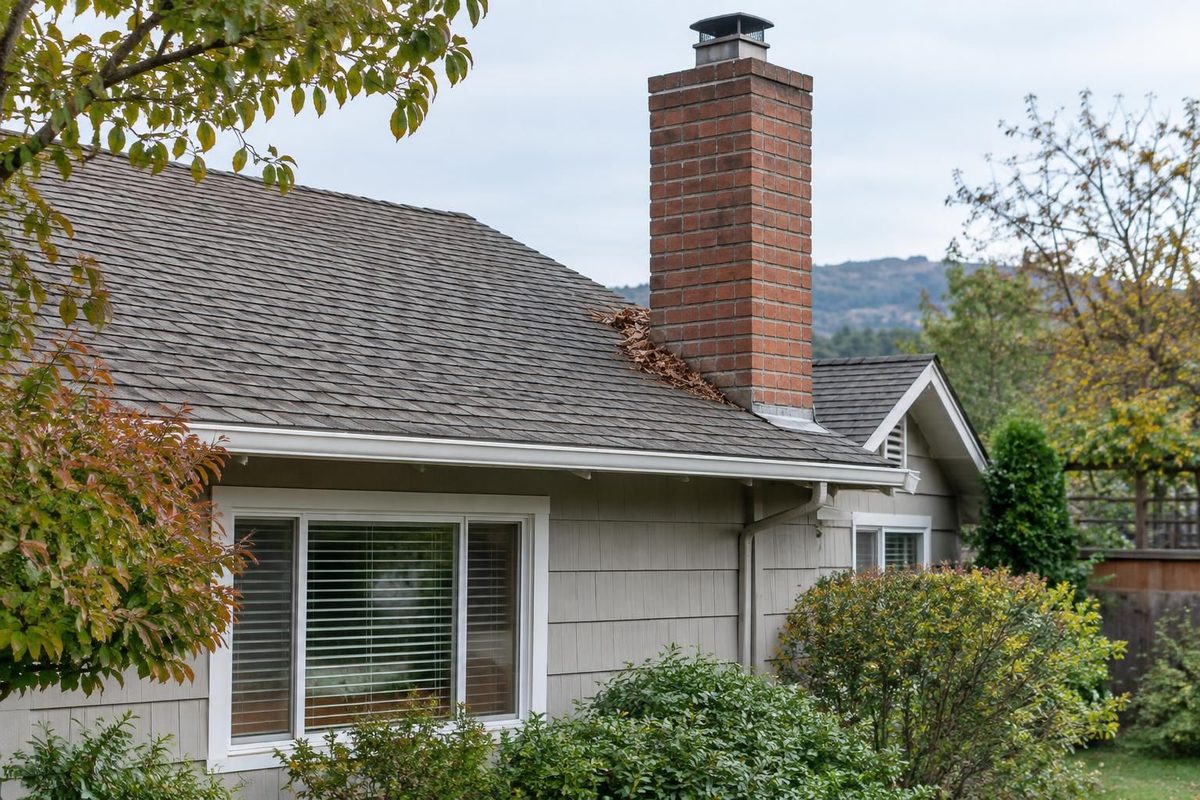
Leaves gathered behind a chimney can slow runoff and keep nearby roof surfaces wet, but a small pile does not automatically mean the roof is damaged. From the ground, note where debris collects and whether you see staining or interior moisture; do not climb up to clear it. A qualified roofer can assess the drainage path, flashing, and surrounding materials and advise whether simple debris removal, monitoring, or repair is appropriate.
Why a small leaf pile can matter
Leaves caught where a chimney meets the roof can slow runoff, especially when wet material forms a compact layer. Water that drains more slowly may remain against roof components longer than intended. In rainy periods, repeated wetting can also encourage staining or organic growth on nearby surfaces.
The concern is not that every small pile causes a leak. A few dry leaves may be temporary debris, while a dense accumulation can cover a detail that needs to drain or be inspected. The roof’s slope, material, flashing design, and condition all influence what the buildup means.
How chimney shape and roof layout affect accumulation
A chimney interrupts the roof’s otherwise continuous path for water. Depending on its position, roof slope, and nearby valleys or ridges, wind can push leaves into the junction or runoff can carry them there. A valley is the channel where two sloping roof sections meet; it may also collect debris moving downslope.
In San Rafael, winter rain and periods of wind can move leaves around, while shade may slow drying on some roofs. These conditions vary by property. A roof surrounded by trees may collect debris more often than a more exposed roof, but the visible amount alone does not show whether water is backing up.
What you can safely observe
From the ground, look for a persistent cluster around the chimney, an unusually dark area, or visible debris in gutters below. Avoid trying to judge a roof junction from a ladder or by leaning out a window. A distant view may not show whether flashing—the material that helps direct water around a roof interruption—is intact.
Inside, note new stains or dampness on ceilings and walls, and record when they appear. A mark near a chimney can be useful information, but it does not prove that the chimney junction is the entry point; water can travel before showing indoors. Do not touch wet electrical equipment. If water is near wiring or fixtures, keep clear and seek appropriate professional assistance.
What a roofer may evaluate
A qualified roofer can assess whether leaves are blocking a drainage path, whether nearby gutters or valleys also hold debris, and whether the roof material and flashing show signs of wear or water exposure. They can determine what access is safe and whether close-up examination is needed.
A visible leaf pile does not by itself establish that repair or replacement is necessary. If the roof materials and drainage details appear serviceable, clearing debris and monitoring may be more appropriate than a larger scope. If there is a leak, damaged flashing, or deterioration, the roofer can explain the evidence and whether a targeted repair or further assessment makes sense.
Prepare useful information for the appointment
Photos taken from the ground can help communicate where debris gathers, but they are not a substitute for an on-roof assessment when one is warranted. Include the date and, if possible, a wider view showing the chimney’s position relative to the roof edge or nearby roof sections.
Ask what the roofer can confirm from the planned access, what remains uncertain, and whether the recommendation addresses the debris alone or a related drainage or flashing concern. If the roof is steep, wet, or otherwise difficult to access safely, let the professional decide how to evaluate it.
When to arrange help promptly
Arrange an inspection if debris keeps collecting in the same place, water appears to remain around the chimney after rain, or you notice new interior staining. A recurring pattern can help the roofer identify where to focus, but it does not establish the cause on its own.
If a ceiling is sagging, keep people away from the area and seek appropriate emergency or professional assistance. Do not puncture it or attempt roof access. For less urgent concerns, share your observations and ask whether the roof needs a prompt visit or can be assessed during routine maintenance.
What to note before arranging an inspection
- From the ground, note whether leaves are gathered at the chimney base, along a roof valley, or against another roof feature.
- Look for visible standing water, dark staining, moss, or debris in nearby gutters without climbing or reaching over an edge.
- From indoors, note any ceiling or wall discoloration and when it appears, such as after wind-driven rain.
- Record whether the accumulation seems new or returns after leaves are cleared from accessible ground-level areas.
- Share clear, dated photos taken from a safe location, and ask the roofer whether close-up access is needed.
Questions about this approach
Do a few leaves behind the chimney mean the roof is leaking?
Not necessarily. A small amount of dry debris may be temporary, but recurring buildup or visible moisture deserves attention. Observe from a safe location and ask a roofer whether the roof’s drainage details need closer evaluation.
Can I clear the leaves myself?
Avoid climbing onto the roof or reaching from a ladder. If debris is not reachable from the ground with ordinary, safe means, leave it for a qualified professional to assess and remove as appropriate.
How often should I check this area?
There is no single schedule that fits every roof. How often debris accumulates depends on nearby trees, wind exposure, roof layout, and seasonal conditions. Ask a roofer what monitoring interval makes sense for your property.
For help applying this approach, explore our roof inspections.
Talk with Able Roofing about your roof
Share the symptoms, property details and questions you want answered. Request a roofing estimate, email jon@ableroofing.biz, or call (415) 786-7308.