
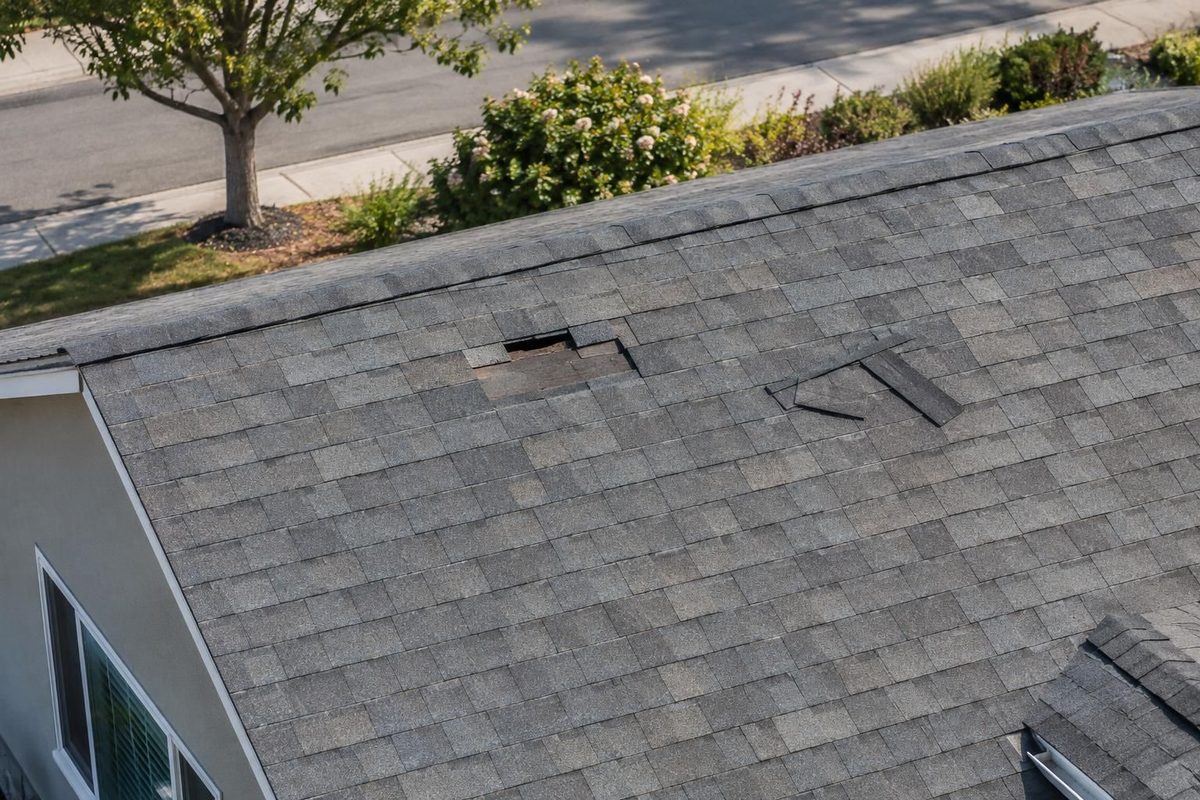
If shingles are missing after a windy night, keep off the roof and arrange a professional assessment, particularly if rain is expected or water is appearing indoors. From the ground or a safe indoor vantage point, note the affected roof area, nearby visible damage, and any new interior marks. Missing shingles do not reveal the full extent or cause: a roofer must assess nearby materials and the underlying roof before advising whether a focused repair is appropriate.
Why a few missing shingles can matter beyond the visible gap
A missing shingle exposes or reduces protection over the layer beneath it. The opening may be small, but wind-driven rain can reach vulnerable areas, and a loosened neighboring shingle can continue to shift. A roof that looks mostly intact from the street may still need a closer professional assessment.
The visible gap does not establish how far damage extends or whether water has entered. Shingles can lift, crease, crack, or lose their seal without disappearing entirely. A roofer considers the roof’s condition and construction before deciding whether a localized repair is suitable.
What wind may have changed around the opening
Wind can catch shingle edges and disturb nearby courses, especially where materials were already weakened, aged, or improperly secured. A missing piece may also follow damage to the fasteners or underlying roof deck, but those causes cannot be confirmed from a street view alone.
In San Rafael, winter rain can make an opening more consequential, while wind-driven moisture may reach areas not directly beneath the visible gap. Shade, debris, roof slope, and drainage details can affect how a particular roof sheds water; conditions vary by property. The location of the missing shingles is useful information, not a complete diagnosis.
Safe observations to make before calling
Use a ground-level view, a window, or another safe indoor vantage point. Avoid climbing a ladder or roof to get a closer look. If you cannot see the roof surface clearly, that is not a reason to take a risk; explain the limitation when scheduling an assessment.
Note whether the shingles appear absent, lifted, or scattered nearby, and whether the gutter or trim looks visibly affected. From inside the home, look for new staining or dampness without entering an unsafe attic. A ceiling that is sagging, an electrical hazard near water, or serious visible damage calls for keeping people away and seeking appropriate emergency or professional help.
What a roofer evaluates before recommending a repair
A qualified roofer can inspect the affected roof area and surrounding courses, including edges and transitions where relevant. The assessment may consider whether adjacent shingles remain secure, whether the exposed area shows signs of moisture or damage, and whether the roof surface is broadly worn or affected in other places.
The roofer also needs to account for the existing material, its condition, and how replacement pieces can be integrated. A single visible gap can sometimes support a limited repair, but brittle or deteriorated surrounding shingles may change what is practical. The right recommendation depends on the roof assembly and observed conditions, not on the missing-shingle count alone.
When limited repair or broader planning may fit
A localized repair may be reasonable when the damage is confined, surrounding materials are in serviceable condition, and compatible materials and a sound attachment are feasible. A roofer should explain what area the proposed work covers and whether the visible damage suggests checking additional locations.
Broader replacement planning may deserve discussion if the surrounding roof is extensively worn, repeated wind damage has occurred, or repair would involve a substantial area of compromised material. That does not make replacement automatic. Ask what specific observations support each option, what remains uncertain, and whether further assessment is needed before deciding.
Questions to settle at the service appointment
Share the date you noticed the missing shingles, any weather context you recall, and safe photos that show both the gap and its wider location. If water marks appeared indoors, describe when and where they showed up, but do not assume the indoor spot identifies the roof opening.
Before approving work, clarify the proposed repair area, materials, any related findings, and the limits of the assessment. Ask what would prompt the roofer to recommend additional work and how that would be discussed before proceeding. These details make it easier to compare the recommendation with what you observed.
What to note before arranging a repair assessment
- From the ground, note the roof area where shingles appear to be missing; use a window or distant view rather than climbing.
- Record when you first noticed the change and whether strong wind or rain occurred around that time.
- Look for visible debris, displaced pieces, or damage to nearby gutters and trim, without touching them.
- From indoors, note any new ceiling marks or dampness and which rooms are affected.
- Take photos from safe locations, including a wider view that helps identify the roof slope.
- Tell the roofer about prior repairs or known roof work, and ask what areas the assessment will cover.
Questions about this approach
Does a missing shingle mean my roof is leaking?
Not necessarily. A gap is a reason to arrange an assessment, but it does not show whether water has entered or how extensive the damage is. Note any new indoor staining and share it with the roofer; seek prompt professional guidance if moisture is active or damage appears serious.
Should I cover the roof opening myself before rain?
Do not climb up or handle roof materials. Record what you can see safely and tell the roofer about the weather and when you noticed the change. If the roof has sagging, serious damage, or an electrical hazard near water, keep people away and seek appropriate emergency or professional assistance.
For help applying this approach, explore our roof repair in San Rafael.
Talk with Able Roofing about your roof
Share the symptoms, property details and questions you want answered. Request a roofing estimate, email jon@ableroofing.biz, or call (415) 786-7308.